


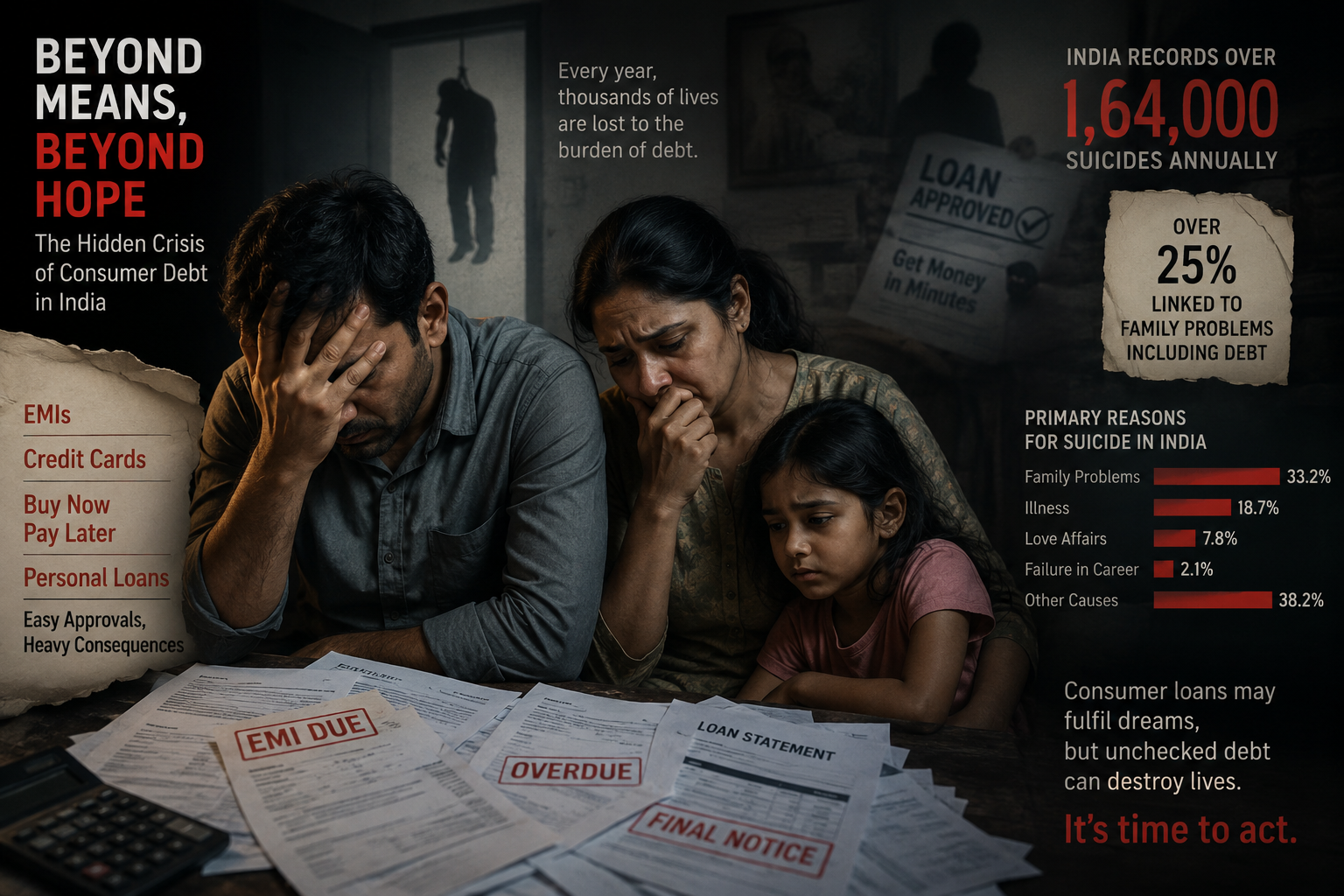
Getting an EMI approved in India barely takes any effort anymore. No bank queues, no collateral, no waiting around for weeks — just a PAN card, an OTP, and an algorithm that says yes in under three minutes. For a lot of Gen-Z buyers, that feels like freedom. Get the phone now, deal with the bill later, split into pieces small enough that none of them feel like a big deal. What doesn’t register in the moment is that this ease is quietly reshaping their financial future before it’s even properly begun. Debt turns into the default way of buying things, well before anyone’s actually built the income to carry it.
The numbers make it obvious why this hits so much harder in India. A smartphone here averages somewhere around $255-260, against roughly $826 in the US. Sounds like a bargain on paper. Weigh it against income, though, and the story flips — Indian earnings are nowhere near American ones, so that “cheaper” phone still eats up a far bigger chunk of what a household actually makes in a month. A premium iPhone running Rs 75,000 or above can quietly swallow an entire month’s household income. Buyers in richer economies rarely face that kind of squeeze for the same phone.
Look at what happened in Chhatrapati Sambhajinagar district in Maharashtra, and the squeeze becomes real. Kunal Chandgude was 18, had an iPhone on EMI, and simply couldn’t keep the payments coming anymore. He went to his parents asking for money for the latest instalment. Things got heated. Kunal walked out of the house and headed to a hillside nearby, and a family argument turned into a three-hour standoff that ended with three people dead — Kunal, his father Murlidhar, who’d spent his whole working life driving to keep the family afloat, and his mother Sangeeta.
And this isn’t some isolated, freak incident. Stories like this keep surfacing across the country: a loan taken for something aspirational, and a family pushed right up to the edge when it turns out to be unpayable. For a lot of young buyers, the latest phone isn’t really about what it does — it’s about what it says. Social currency. Proof you belong, especially with social media constantly tying self-worth to what you own. That pressure doesn’t stay contained to the buyer either; it spills into arguments at home, parents stretching themselves thin to fund something they can’t really afford, just so their kid isn’t the one left out.
When the numbers never added up in the first place but the purchase happens anyway, the EMI stops being a routine bill and becomes something to dread every single month. For some families, that dread turns into recovery calls and legal trouble. For others, it turns inward — shame, hopelessness, and in the worst cases, people taking their own lives over it.