


Amid E20 debate in India, Bhutan says no to India’s Ethanol blended fuel. Here’s what it means

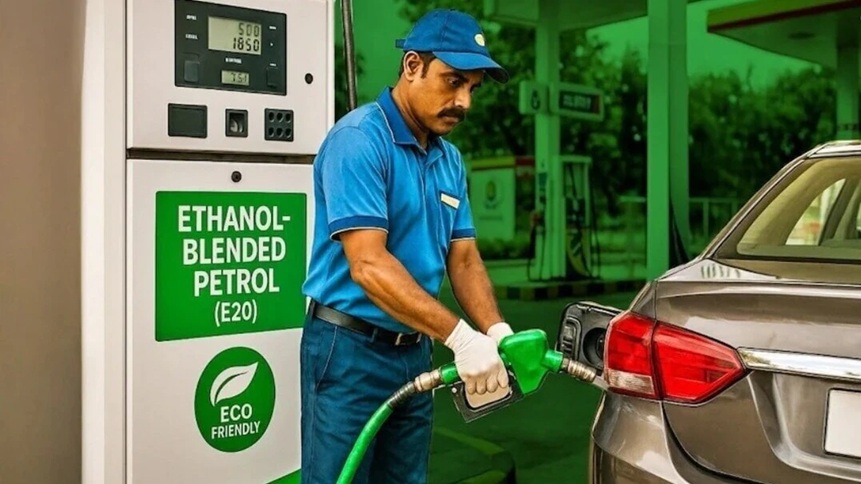
As India has been moving towards its ethanol-blending programme, neighbouring Bhutan has decided not to adopt E20 petrol for now, citing concerns over its existing fuel storage infrastructure. However, India’s nationwide rollout of E20 petrol continues to trigger debate over its impact on vehicles.
According to media reports, Bhutan has requested Indian Oil Marketing Companies (OMCs) to continue supplying normal petrol until its infrastructure is capable of safely handling ethanol-blended fuel. The decision underlines how infrastructure readiness and geographical conditions can shape energy policy alongside environmental objectives.
Bhutan, which imports all of its fuel from India, said its existing underground fuel storage tanks are not designed to safely handle ethanol-blended petrol. Officials informed that many storage tanks are old and vulnerable to water seepage. However, ethanol is hygroscopic that means it readily absorbs moisture and E20 fuel is more susceptible to contamination than conventional petrol. If water enters storage tanks, ethanol-blended fuel can become diluted, increasing the risk of corrosion in tanks and pipelines while also affecting engine performance over time.
The Bhutan government said its current storage infrastructure could make it difficult to maintain fuel quality if E20 petrol is introduced. Apart from storage infrastructure, Bhutan’s geography also played a key role in its decision to reject Ethanol blended fuel because Bhutan’s roads passing through steep mountainous regions, authorities believe vehicles require consistent engine performance and power. Talking about challenges, Bhutan government also informed that the majority of fuel depots in Bhutan are located in humid hill regions where preventing moisture from entering storage facilities is difficult”, Bhutan government said
Bhutan has reportedly asked Indian OMCs to inform it well in advance if India moves towards higher ethanol blends such as E25 or fully ethanol-based fuel. The country has also requested support in upgrading its fuel infrastructure, including leak-proof storage tanks capable of handling ethanol-blended fuel safely.
Officials said that if E20 fuel is accidentally supplied under current conditions, contamination would be easily detected because even small amounts of water would cause the fuel to turn milky.
Bhutan’s decision comes at a time when India’s E20 petrol rollout has become the subject of public debate.
Owners of older petrol vehicles have raised concerns over reduced fuel efficiency, higher maintenance costs and long-term engine wear. The government has maintained that while E20 may lead to a slight reduction in mileage, it offers benefits such as improved acceleration and reduced dependence on fossil fuels.
The issue also reached the Supreme Court recently, where the government’s ethanol blending programme came under discussion. Meanwhile, India has already begun testing E25 petrol as part of its long-term biofuel roadmap.
Bhutan’s decision highlights that fuel transition strategies may vary depending on local infrastructure, climate and terrain, suggesting that a uniform approach may not be suitable for every country.