


India and Australia on Thursday adopted a new Joint Declaration on Defence and Security Cooperation, committing to significantly deepen military engagement, strengthen defence industrial collaboration and expand maritime security cooperation amid growing geostrategic uncertainty in the Indo-Pacific.
The declaration outlines an ambitious roadmap to elevate defence ties through closer strategic consultations, enhanced interoperability between the armed forces, expanded military exercises and greater collaboration in defence science, technology and industrial supply chains.
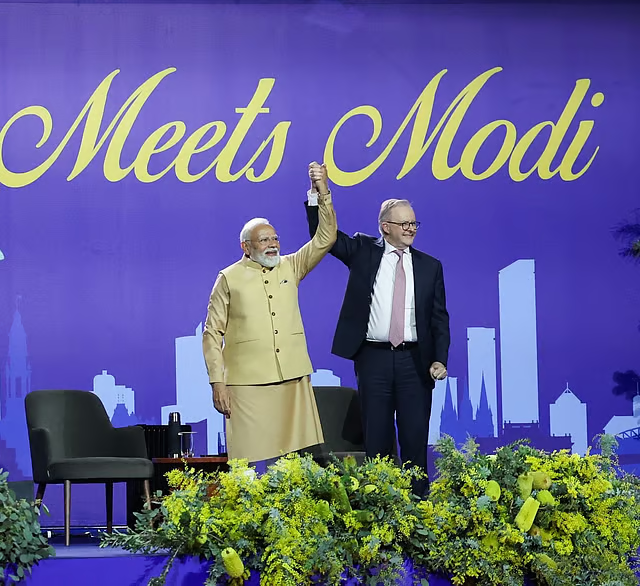
At a diaspora event in Melbourne, Prime Minister Narendra Modi marked his third visit in 12 years as a “hat-trick” and emphasised that 21st-century India is driven by the mantra of “Nagrik Devo Bhava” and the collective aspirations of its people, or “We, the People”.
Declaring that the nation is working toward becoming a developed country where citizens aim to “grow more, achieve more”, the Prime Minister highlighted significant technological and industrial progress, noting that India is developing a manufacturing ecosystem ranging “from chips to ships”, advancing 6G technology, and working toward building its own space station.
Furthermore, PM Modi asserted that the world places immense trust in India because the nation provides humanitarian aid regardless of the “colour of passports”, while also noting that during “Operation Sindoor”, India’s decisive action against terrorist bases resonated globally.
Besides this, PM Modi also announced a key nuclear energy agreement to enable uranium supply from Australia to India after discussions with Australian Prime Minister Albanese. He also added that both the countries will work together on a critical minerals corridor.
The Defence sector also was covered during the visit. Modi announced a joint declaration to expand defence and security cooperation. He said, “We will work towards collaboration between Indian, Australian defence industries through India-Australia defence innovation corridor.”