


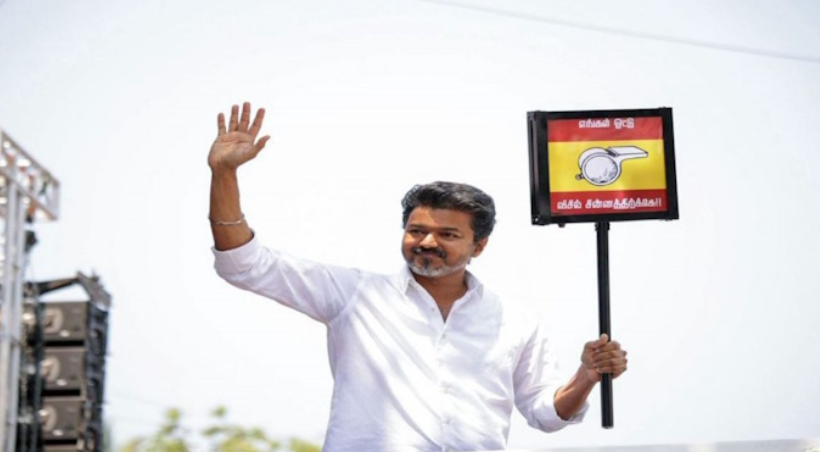
Chennai: The entry of a new political party into the Tamil Nadu political arena has served as both a launchpad for historic political changes and a graveyard for grand political ambitions. Actor-politician C. Joseph Vijay’s Tamilaga Vettri Kazhagam (TVK) has broken the monopoly of Dravidian parties in the 2026 assembly elections.
A quick look at the electoral history of select political parties in previous state assembly elections offers a path forward, as well as a warning. For this analysis, only general assembly elections have been considered; by-elections or Lok Sabha elections have not been included.
One of the most impressive electoral debuts in Tamil Nadu’s political history was the DMK’s launch in the 1957 Madras Assembly elections. The party was founded in 1949 by C.N. Annadurai after splitting from the Dravidar Kazhagam. The party had developed a strong following through the literary and theatrical energy of the Dravidian movement and as an alternative to the Congress.
Although the party did not participate in the first post-independence elections, its leaders decided to contest the 1957 elections at the party’s second state conference held in Tiruchi in May 1956. The DMK fielded candidates in 112 of the 167 assembly seats. All of these candidates contested as independents, and won 15 of these seats. Prominent leaders who won the elections included Annadurai, M. Karunanidhi, K. Anbazhagan, Satyavani Muthu, and P.U. Shanmugam.
The party’s candidates received a total of 16.53 lakh votes, representing approximately 14.8% of the total votes cast. Prominent leaders who lost the election included V.R. Nedunchezhiyan, Kannadasan, S.S. Rajendran, and Anbil Dharmalingam. By 1962, in the first election held under its own symbol, the DMK won 50 of the 143 seats, garnering 27.1% of the vote; it subsequently returned to power with a landslide majority in 1967.
A decade later, the political landscape had completely changed. Madras State had now become Tamil Nadu. In 1972, M.G. Ramachandran, a stalwart of the DMK and a popular film star, was expelled from the party; he subsequently formed his own party, the ADMK, which was later changed to the AIADMK. The 1977 assembly elections, held after the Emergency, saw a close contest between the DMK, AIADMK, Congress, and Janata Party. The AIADMK, contesting for the first time, fielded candidates in 200 seats and won 130, far exceeding the 118 required for a majority. MGR became Chief Minister, and his party secured a very impressive 30.36% of the vote.
Founded by S. Ramadoss in 1989, the Pattali Makkal Katchi (PMK) emerged from movements specifically demanding reservations for the Vanniyar community; the party transformed the Vanniyar Sangam into a political platform. Participating for the first time in the 1991 assembly elections, the party contested 194 seats but won only one. Panruti S. Ramachandran, a former DMK minister who later joined the AIADMK, won the Panruti assembly seat. Despite a strong wave of sympathy for the Congress and AIADMK alliance in Sriperumbudur following the assassination of former Prime Minister Rajiv Gandhi, the PMK secured 5.89% of the vote, which was considered a respectable performance.
Join our whatsapp group for Latest updates
Click Here for Chhattisgarh News
Click Here for Entertainment News