


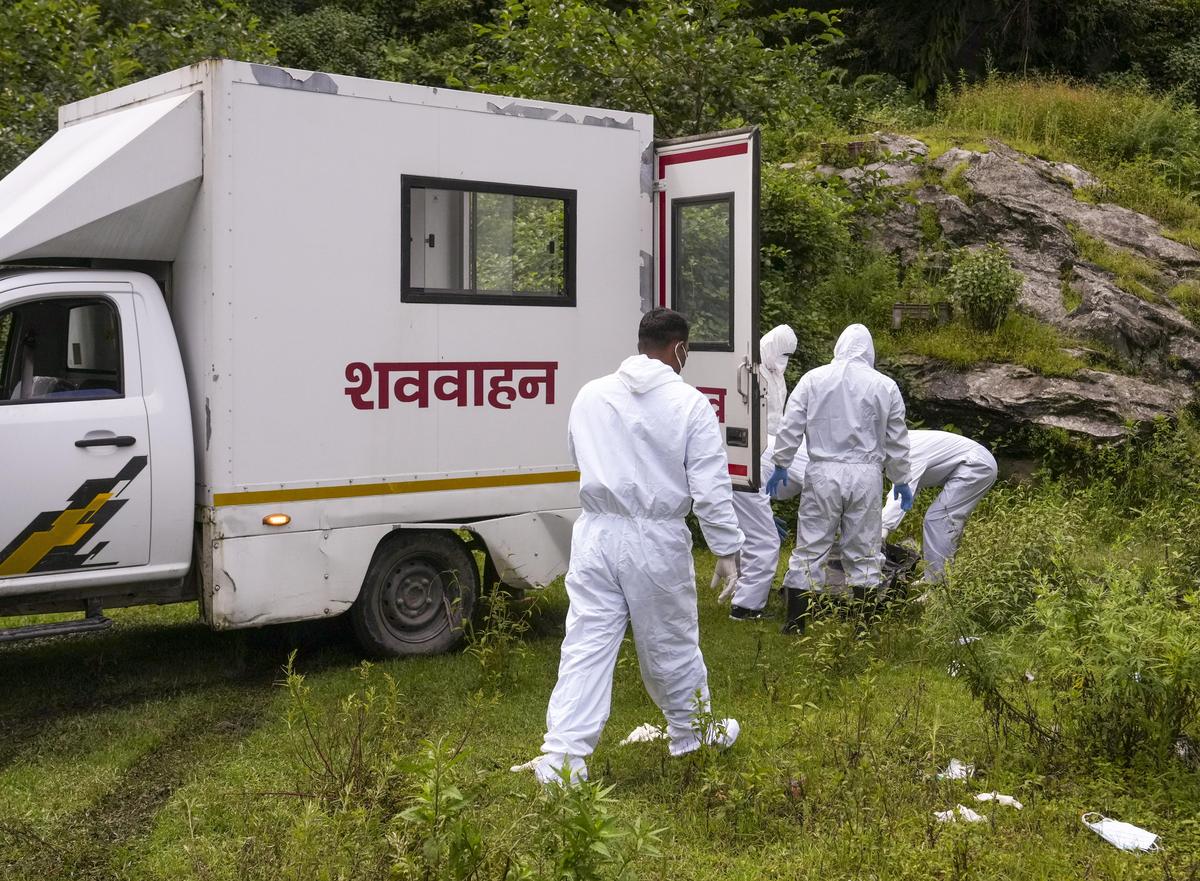
The death toll due to the apocalyptic flash floods rose above 1,000 with more than 4,400 people remaining unaccounted.
Authorities have begun burying hundreds of unidentified victims in a mass burial procedure. Rescue crews are racing against time to find workers trapped inside th3 hydropower tunnels after thick mud buried the facility. Nearly 900 workers are said to be missing 2ith grim chances that they are alive..
Meanwhile, Nepalese authorities on Tuesday have issued fresh alerts over flooding in several districts across eastern, central and western regions of the country, urging people not to venture near water bodies, remain vigilant and take precautionary measures.
A high possibility of flooding is reported from Nuwakot and Rasuwa districts, where water flow in smaller rivers and streams is expected to rise, according to a notice issued by the National Disaster Risk Reduction and Management Authority (NDRRMA).
16 rescue helicopters have been engaged in the affected areas for search and rescue operations. So far 11,000 people have been rescued.
The incident has taken a political turn as exiled Tibetans and advocacy groups have accused China of heavily underreporting the death toll from devastating flooding in border regions with Nepal, claims Beijing rejected as “malicious smearing and sensationalism”.
Foreign journalists are restricted from reporting from Tibet and Chinese authorities have a tight grip on information sources on the region.
Nepal is also battling misinformation as AI generated visual of the flood have been making rounds on the internet. Fake and AI-generated visuals inundated social media following the devastating flash floods, prompting the government to order 72 users to remove inappropriate content over the past few days.The Nepal Press Council, the country’s media regulatory body, has opened a dedicated portal, titled “Special Complaints on the Bhotekoshi Incident”, through which the public can report misinformation and graphic material related to the disaster, a local news agency reported yesterday.
The move comes as social media platforms have been inundated with dramatic videos and images purportedly showing the destruction caused by the flash floods in the Himalayan nation. While some of the footage is genuine, fact-checkers have found that several widely circulated videos and images are from disasters in other countries, recycled from earlier events or generated or manipulated using artificial intelligence, the report said.