


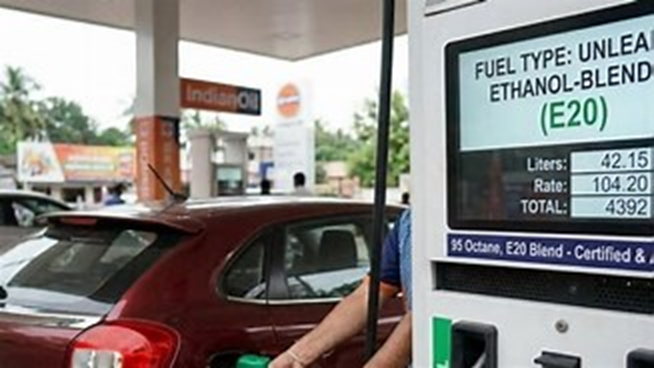
For a policy that was designed to reduce India’s imported crude oil dependency, the E20 has found itself at the centre of a public debate. While the government continues to defend its stance on the new introduction concerns over ethanol blended fuel damaging the vehicles and adversely affecting the environment, refuse to die down.
Since the E20 launch, social media has been flooded with videos, claiming the damage of the vehicle engines. At the centre of the debate are two topics- Will E20 damage vehicles, and can India afford more water produce ethanol. Rejecting the claim, the government on Tuesday called them misleading videos, asserting that India’s Ethanol Blending Programme (EBP) is scientifically validated and closely monitored by the government. The Ministry of Petroleum and Natural Gas highlighted that those clips were old and being recirculated to create unwarranted concerns about ethanol-blended fuel and mislead consumers. “The Ethanol Blending Programme is scientifically validated and continuously monitored by the Government,” the ministry said.
Citing examples of countries like Brazil, US and Japan where the practice was widely practices, the centre asserted that the program was research backed and reported no engine failure or vehicle breakdown linked to E20. Yet concerns continue to grow.
Recently, an alleged advisory from Ford India customer support warned that higher blended ethanol could potentially affect the engine performance and even vehicle warranties if the fuel is not recommended for a particular model. The report sent a wave of fear and tension amongst vehicle owners possessing older vehicles originally designed for lower ethanol content which may face wear and tear on long term use.
However, the question lies beyond the engine damage. Critics argued that producing large quantities of ethanol from particularly sugarcane and rice places pressure on the already suborned water resources. This concern has intensified debate across consumers who question the introduction of E20 fuel comes at the cost of increased water consumption. There are also reports of water crisis across cities in India and people are now linking the issue with Ethanol blending because the process consume a lot of water. The E20 made up of either sugarcane or rice, both have consume a lot water.
Producing 1 litre of ethanol from sugarcane requires between 2,000 and 3,630 litres of water, while 10,790 litres of water is needed to produce one litre of ethanol from rice.
The ongoing debate on ethanol use is no about fuel but it is also talks about water, agriculture and resource management. Supporters argue that ethanol strengthens India’s energy security, reduces oil imports and provides additional income for farmers. Critics replied that expanding production without considering local water availability could worsen groundwater depletion in already stressed regions.
For now, the debate is unlikely to end as it remains to see how the ethanol program drives the energy sector of the country. Critics meanwhile are demanding greater transparency and long-term water cost of producing fuel from crops.