


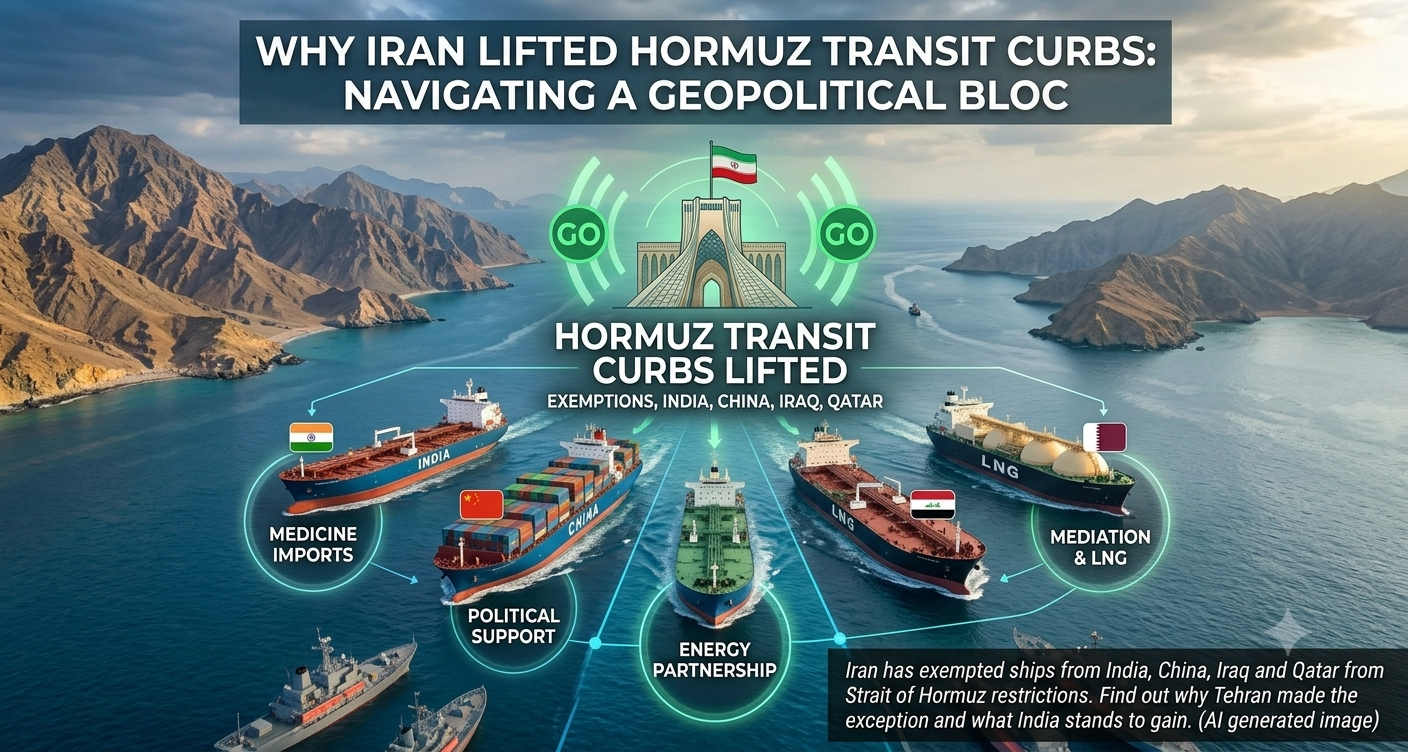
Iran has eased transit restrictions for Indian vessels, along with those from China, Iraq and Qatar, in a move that could help protect India’s energy supply.
Tehran made it clear that the exemptions are not simply a goodwill gesture. In return, Tehran wants either medicines from India or stronger political support from China.
The selective exemptions were revealed by Amer Hayat Moqaddam, the deputy chairman of the Iranian Parliament’s National Security and Foreign Policy Committee, in an interview with the local media outlet. He said, “We have currently exempted India, China, Iraq and Qatar from transit restrictions in the Strait of Hormuz. Ships from these countries pass freely, and the Americans do not intercept them either.”
According to him, permitting Indian vessels to transit the strait would help Iran secure a consistent supply of medicines and pharmaceuticals the have because of International sanctions and disrupted. Restricting Iran’s access to overseas markets and financial networks. India, a potential pharmaceutical manufacturer holds a substantial capacity to potentially source essential medicines and medical supplies.
The exemption matters because the Strait of Hormuz is a critical waterway that drives the energy market of the country. Allowing Indian ships to pass through the Strait of Hormuz could help New Delhi avoid further disruption to supplies at home when the conflict has made shipping through the region uncertain.
Meanwhile, China’s inclusion in the list appears to be more diplomatic, driven by diplomatic considerations. Moqaddam said that the exemption was intended to secure Beijing’s support for China. It remains an important economic and energy partner for Iran, making its political backing particularly valuable as tensions with Washington and its allies persist.
Prior to the conflict, approximately 45% of India’s crude oil imports and 90% of liquefied petroleum gas passed through the critical waterway, as per the data shared by the Union Petroleum Ministry.
The Strait of Hormuz, which connects the Persian Gulf to the Gulf of Oman and the Arabian Sea, is a critical passage for energy producers in the Middle East to supply crude oil across the globe.