


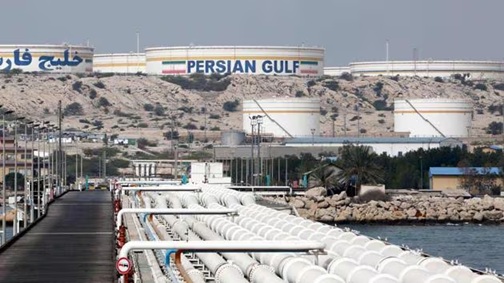
Oil prices surged on Wednesday after attacks on two ships reignited tensions about disruptions to Middle East supplies. According to industry data swelling inventories of U.S. crude might keep bulls in check. Brent futures were up 90 cents, or 1%, at $89.81 a barrel by 0757 GMT, set for their sixth day of gains. U.S. West Texas Intermediate (WTI) crude climbed 88 cents, or 1.1%, to $84.08, up for a fifth day. Both contracts earlier rose more than $1.
The number of vessels tracked passing through the Strait of Hormuz fell to a one-week low on Tuesday, as shipowners continued to avoid the strategic waterway amid disruptions linked to the conflict involving Iran and the US.
Shipping data from Kpler, cited by media, showed eight vessels transited the strait on Tuesday, below the 10-day average of around 12 and the lowest daily tally since August 5. Separate data recorded 11 transits, down from 14 a day earlier.Before Iran closed the waterway following the start of US-Israeli attacks on February 28, around 130 to 140 vessels typically passed through the strait each day.
Iran backed Yemeni group Houthi claimed separate attacks on shipping in the Strait of Hormuz and the Bab el-Mandeb Strait on Tuesday, two crucial export valves for Middle Eastern oil and gas in addition to the Suez canal.
According to experts, India may find it difficult to quickly reduce its dependence on Russian crude even as the US moves closer to giving President Donald Trump powers to impose tariffs of up to 100% on countries buying Russian oil.
India imports around 90% of its oil requirements, making a large-scale and immediate replacement of Russian crude difficult. Experts said alternative supplies from Gulf countries, the US and Venezuela may not be sufficient to replace Russian volumes at the same scale, particularly when global energy markets are already facing disruptions.