


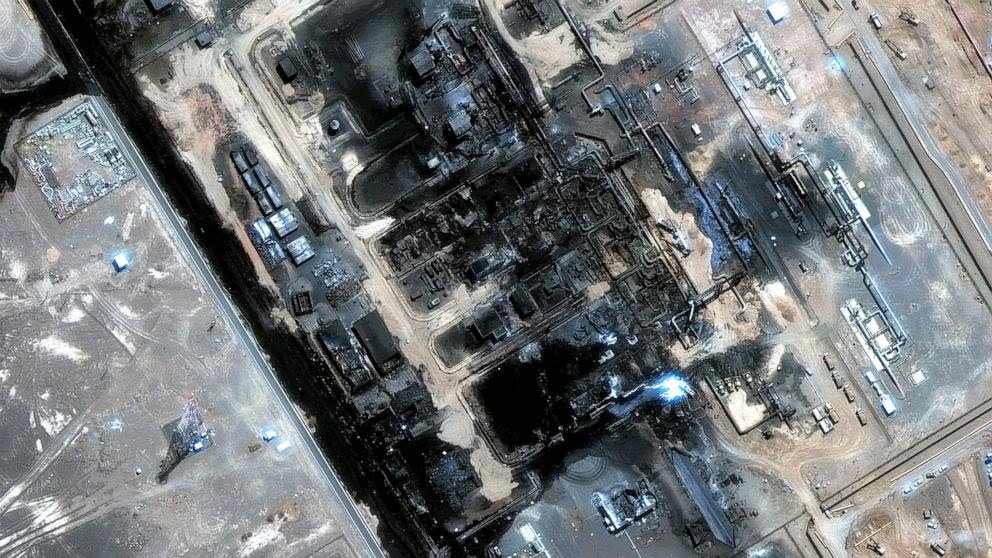
Global trading Benchmark Brent crude prices surged more than 3% on Monday as fresh attacks in Saudi Arabia and on vessels in the Gulf added to concerns over global oil supplies after Saudi Arabia shut down a key pipeline.
The surge came after oil prices gained about 8% last week, pushing Brent above $100 a barrel for the first time since July.
Brent crude futures rose $3.32, or 3.19%, to $107.51 a barrel as of 2313 GMT, according to Reuters. West Texas Intermediate (WTI) crude futures rose $2.27, or 2.27%, to $102.32 a barrel. Prices had initially climbed more than 3% at the market open.
Saudi Arabia shut down its East-West pipeline following a drone attack by the Houthis. Analysts said the kingdom could run out of oil stocks available for export within days if it fails to restart the major pipeline.
The damage could also threaten to remove up to 4% of global oil supply from the market. Saudi Arabia has enough crude at the Red Sea port of Yanbu to maintain exports for only five to seven days, according to sources familiar with the matter.
Saudi Arabia shut down the East-West pipeline on Friday following the drone attack. The pipeline carries Saudi crude from the country’s oil fields in the east to Yanbu on the Red Sea.
There is so far no official information on the extent of the damage or when the pipeline could be restarted. One source said repairs could take five to six weeks, while another said the pipeline could be repaired sooner. The pipeline may also resume partial pumping while repairs continue, sources added.
The pipeline has been a key alternative route for Saudi Arabia, the world’s biggest oil exporter, to bypass disruptions in the Strait of Hormuz. It has been used to transport more than 4 million barrels of oil per day to Yanbu, equivalent to roughly 4% of global oil supply.
The shutdown now threatens this alternative export route. Saudi Arabia, however, has additional crude stocks at ports including Jeddah, Ain Sukhna on the Red Sea and Sidi Kerir on the Mediterranean.
Yanbu has an approximate storage capacity of 35 million barrels, while Ain Sukhna can hold about 18 million barrels and Sidi Kerir about 20 million barrels.
The latest disruption comes after a sharp decline in Saudi oil production. Saudi Arabia told OPEC that its output had fallen to 6.2 million barrels per day in August, down from 10.19 million barrels per day in February, before the war.
According to the International Energy Agency (IEA), Saudi oil supply has fallen to its lowest level in more than three decades. The agency cited reduced flows through the Strait of Hormuz and the Red Sea as contributing factors to the further decline.
The IEA expects global oil supplies to fall by 5.7 million barrels per day this year, roughly 6% of global supply.
A prolonged shutdown of the East-West pipeline could therefore remove millions of barrels of Saudi crude from the global market, raising concerns over oil supplies and adding further pressure to already elevated crude prices.