


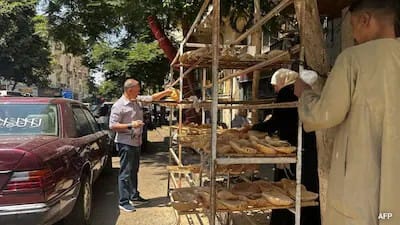
Egypt’s action to eliminate hundreds of thousands from its food subsidy programme is adding to the difficulties of low-income families already living in years of economic hardship and inflation.
Eman Abdel Fat, 42, from El-Marg, a working-class community in Cairo, recently found herself having to figure out just how much bread she could afford since her family’s food subsidy card had been called into question. She says her family had already feared that they couldn’t afford to buy meat, but also they are troubled by which to buy bread.
Egyptian flat bread is the basis of every day’s meals in Egypt. For those people who were losing the subsidy there the cost has skyrocketed! Abdel Fattah explained that after the cancellation of their subsidy on bread in July, his family has to pay approximately 10 times more than they used to for bread.
The supply ministry in Egypt said it has pulled nearly 850,000 people out of the subsidy system since June. In an effort to cut the price of one of the world’s biggest food subsidies programmes, the government will make additional cuts next year that it predicts will exclude millions more.
The adjustments are among varied economic reforms supported by the International Monetary Fund. Officials in Egypt have insisted the only ones to be taken off the programme are those deemed “undeserving” or “ineligible”.
But the reforms follow years of pressure brought on the economy. Home savings have been eroded due to several currency devaluations, and a rate of double-digit inflation has caused many Egyptians to struggle to cover their monthly expenses.
Prior to the initial economic crisis in 2022, approximately one-third of Egypt’s population (about 35 million people) was already living in poverty, one-third just above the edge.
For families, such as Abdel Fattah, the cuts on the subsidy have made something as essential as a need.