


PM Modi unveils Rs 35,000 crore project in Vadodara; Dedicates new freight corridor to the nation

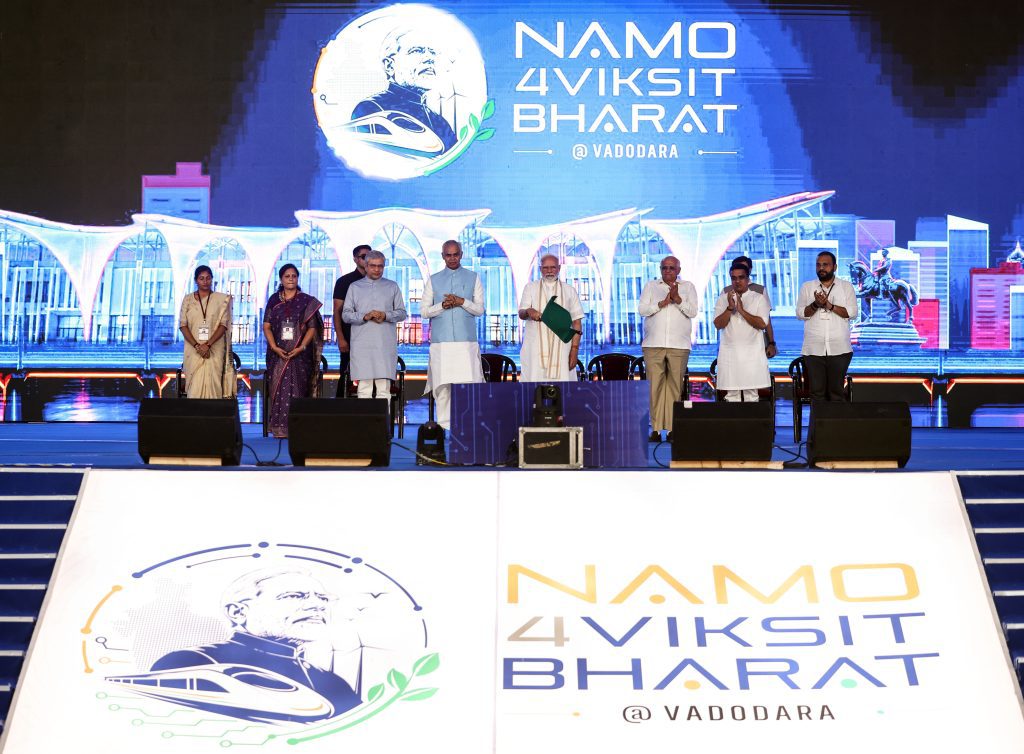
Taking a dig at the previous Congress regime for the slow pace of developmental work, Prime Minister Narendra Modi said that “Nara’z Fufa” would now question the impact of the dedicated freight corridor on truck drivers.
Addressing a programme in Vadodara during the launch of key projects, Prime Minister Narendra Modi pointed out that although the project was initially conceived in 2006, it suffered from years of inaction. In contrast, the accelerated execution over the past decade has transformed India’s logistics ecosystem, which he described as a lifeline for the country’s rapid development.
Emphasising its operational impact, the Prime Minister noted that separating freight traffic from passenger lines has significantly improved efficiency. He underlined that the massive reduction in travel time is driving substantial fuel savings, reducing environmental impact and establishing a faster, cleaner supply chain across the country.
At the event, he dedicated three key sections of the Western Dedicated Freight Corridor to the nation, marking the full completion and operationalisation of the freight corridor network. Addressing the gathering, Prime Minister Modi highlighted the rapid transformation of India’s transport and logistics sector, calling the completion of more than 2,800 kilometres of dedicated freight corridors a historic achievement of the 21st century and a testament to the nation’s changing work culture.
Praising Indian youth, he added that they are witnessing a government thrust across the solar, nuclear and wind energy sectors. Emphasising the importance of energy for future technologies, he remarked that upcoming industries, including artificial intelligence, will be entirely power-driven. He said the government is therefore focusing on establishing a robust, multi-sectoral energy ecosystem to power India’s future growth.
Modi flagged off five train services from New Sanand, New Makarpura, New Umbergaon and New JNPT, along with a new passenger train service between Tanda Road and Vadodara, connecting remote tribal regions of Alirajpur to the national rail grid.
He also laid the foundation stone for three railway expansion projects worth more than ₹9,700 crore and three national highway projects costing around ₹1,780 crore to ease congestion and boost connectivity across Gujarat and Madhya Pradesh.
Besides, various civic and infrastructure projects of the Gujarat government worth ₹2,600 crore were launched, including a megawatt-scale floating solar plant at Kadana Dam and PMAY housing units.