


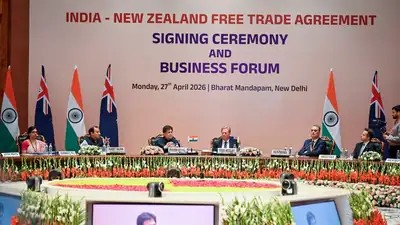
On April 27, India and New Zealand concluded the Free Trade Agreement (FTA) which is like a milestone in improving the economic relationship between the two countries. The agreement follows the conclusion of negotiations in December 2025, with a broad scope of issues such as trade in goods, dispute resolution, legal frameworks, and economic cooperation.
In announcing the agreement, the Union Commerce and Industry Minister Piyush Goyal noted the fact that the FTA was concluded in a period of only nine months, and this is indicative of the trust building and mutual goals between the two nations. He referred to the agreement as an important step towards the realization of the vision of a developed economy in India as envisaged by the Viksit Bharat 2047.
Among the highlights of the deal is the promise by New Zealand to make an investment of 20-billion dollars in India within the next 15 years. The agreement also grants 100 percent duty-free access of Indian exports to New Zealand, which benefits the Indian textile, leather, plastics and engineering goods industries.
As a boost to professional workers, the FTA has a new type of visa called the Temporary Employment Entry Visa, guaranteeing at least 5,000 visas to Indians in specialised fields, with a maximum period of three-year stay.
The agreement also opens up agricultural and trade opportunities on both sides. As New Zealand will have an improved access to products such as wool, wine and fruits, India will be working together in areas of agriculture such as the cultivation of kiwi fruits, apples and production of honey.
On balance, the FTA is likely to increase the movement of trade, employment opportunities, and strengthen strategic economic integration between the two countries.