


Residents in Guam and North Marianas prepared on Saturday as super typhoon, Bavi, approached them. Tagged as the second super typhoon since April, Bavi drew closer to the U.S. territories, bringing the equivalent of Category 5 hurricane winds.
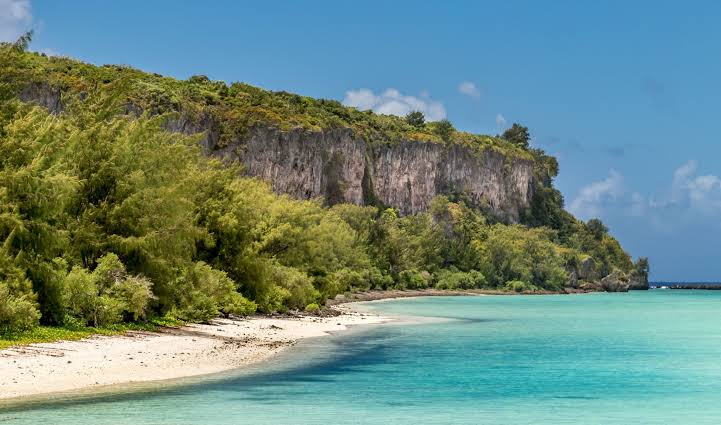
Pictures of the island circulated on social media showing a purple sky against the setting sun, with silent waters preparing for the typhoon.
Bavi was moving westward with sustained winds of 269 km/h and gusts of 324 km/h, the Joint Typhoon Warning Center said in an update at the local time in the evening.
The eye of the storm was expected to pass on Monday very close to the small island of Rota, between Guam and Saipan, the main island of the Northern Marianas, with winds set to strengthen to 278 km/h, the forecast read.
Guam was set to go into a ‘condition of readiness 2’, meaning a typhoon was expected within 24 hours from 10 p.m, with emergency shelters due to open Sunday from 7 a.m., the governor’s office said.
Residents were told to bring enough food and water to the shelter, which would last for at least seven days for each of the family members, as well as medicines, bedding, and personal hygiene that would be needed. Pets were not allowed.
Plans for celebrating America’s 250th anniversary, also known as the Liberation Day for Saipan, were overtaken quietly by the storm preparations, where both Guam and North Marianas declared a state of emergency.
Many of the islands, roughly with 2 lakh inhabitants, have queued at petrol stations in the recent days and thronged hardware stores to buy plywoods to board up their windows while heavily crowding grocery stores to stock up on food, water, and other essentials.
Earlier in April, super typhoon Sinlaku hit the Northern Marianas archipelago knocking out power for tens of thousands of people, uprooted trees, overturned cars and ripped metal roofs off buildings.
The World Meteorological Organization warned on Friday that El Nino, which typically occurs every two to seven years and lasts nine to 12 months, has already begun in the tropical Pacific and is likely to be strong.