


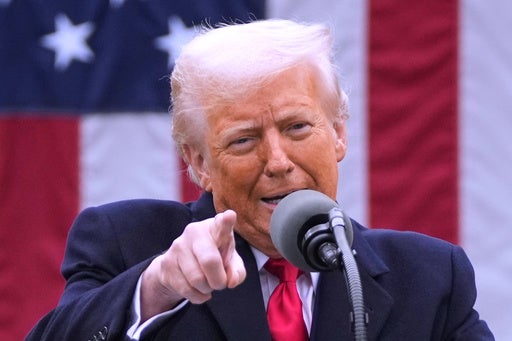
US President Donald Trump on Wednesday issued a new tariff salvo on 14 major trading partners, including China, Japan and the European Union.
Undeterred in its protectionist push, the Trump administration has proposed new maximum potential rates of 20% to 40% to counter excess industrial capacity that it says these countries are promoting. However, the US Trade Representative’s office said it intends to cap the new tariffs at lower levels agreed under trade deals that are completed or still under negotiation.
The USTR aims to more fully rebuild Trump’s tariff leverage after the Supreme Court in February struck down his broad global trade tariffs under a national emergencies law. The effort also seeks to put Trump’s tariffs and associated trade agreements on more solid legal and political grounds by backing them with the court-tested trade law, Section 301 of the Trade Act of 1974, and addressing foreign subsidies and industrial policies that are viewed as a major threat by both Republicans and Democrats.
Under the excess factory capacity probe, China is expected to face the highest capped rate of 20%, which would be added to the duties of roughly 25% imposed during Trump’s first term. The rate would comply with the US-China trade truce, which expires on January 10. But if the trade truce unravels, China’s rate would rise to 40%.
The USTR said Vietnam would face a capped tariff rate of 20% if it reaches a trade agreement with Washington, rising to a full tariff of 35% if negotiations fail.
US Trade Representative Jamieson Greer said he decided to propose the tariff increases after a three-month investigation. The tariffs, which would not take effect until after a public hearing on January 25, are intended to counteract industrial strategies built on targeting manufacturing, wage and labor suppression, financial and other support, non-market economy inputs, and other market-distorting practices that undermine the US manufacturing base.
Meanwhile, lower tariffs have been proposed for Cambodia, Indonesia, Malaysia, Thailand and Bangladesh, at 18%. Japan, South Korea, Taiwan, the EU and Switzerland will face a 15% levy. India, which has yet to reach a trade deal with the Trump administration, would face a 17% tariff if the agreement is finalized. However, if the talks fail, it would have to pay 25% on imported goods. Singapore received the lowest tariff, capped at 10%.
Mexico and Norway were excluded from the proposals because investigations into their trade practices remain underway, Greer added.
Meanwhile, the USTR proposed a new 10% tariff on imports of Brazil finished Embraer commercial aircraft and an increase in duties on imports of Brazilian sugar that exceeded quota as a part of effort to push Brasilia to rectify alleged unfair trade practices. The products were previously exempted from the Trump’s 25% tariff that was imposed in July under a separate Section 301 investigation. The latest revision comes after prolonged talks between the US and Brazil made ‘no meaningful progress’.