


‘Strait of Hormuz’ will open only if US accepts all conditions: Iran foreign ministry spokesperson

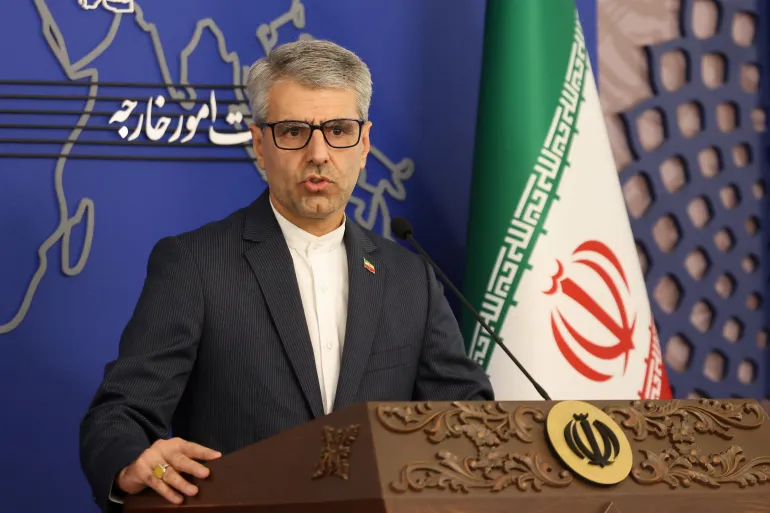
The top issue being discussed by Iran is the reopening of the critical waterways, its Foreign Ministry spokesperson Mohammad Baqer Ghalibaf said.
“We are at this stage focusing on the strait foremost, and our main concern is to reach a solution and to have peace and stability restored within this waterway,” Esmaeil Baghaei said.
Asserting that tangible measures must be taken by the United States, he said certain issues must be put to discussion and pointed out that the sanctions imposed by the United States must be lifted. He added that the U.S. continues to focus on the nuclear file, while reopening the Strait is Iran’s main goal.
He added that Washington had sent proposals through a mediator but warned that Iran would no longer accept what he described as attempts to ‘stall for time’ or impose unilateral demands.
Foreign Minister Abbas Araghchi said Tehran’s proposals could allow the reopening of the Hormuz within seven days if Washington accepts Iran’s conditions. He also said Iran prefers diplomacy but is prepared to respond to the U.S. if it chooses military retaliation.
On the contrary, the conflict has not fully ended. As per reports, additional military and artillery support is being deployed in the Middle East.
On Friday, a U.S. official confirmed the Pentagon was deploying the USS Theodore Roosevelt carrier strike group to waters around Iran. Sources added that the ships carry more than 7,000 sailors and 2,000 marines.
Earlier, on September 26, Trump publicly rejected the proposal, saying it was not acceptable, as Tehran conveyed seven conditions, including ending the war on all fronts, releasing its frozen funds, and lifting the U.S. naval blockade.
Meanwhile, warplanes targeted a Houthi gathering in the Al-Sharjah area of Jabal Habashi district, west of Taiz in Yemen, as per local media.
OPEC+ aims to keep oil output target steady, as per reports. OPEC+ producers in the Gulf have been pumping well below output targets in the face of continuing export disruptions from the U.S.-Israel war on Iran.
Exports have fluctuated between 60 to 80 percent below the normal levels in recent months. The body, which is meeting today, has been raising output targets for much of 2026 after years of production cuts, but most of the increases have only been on paper because of the war.