


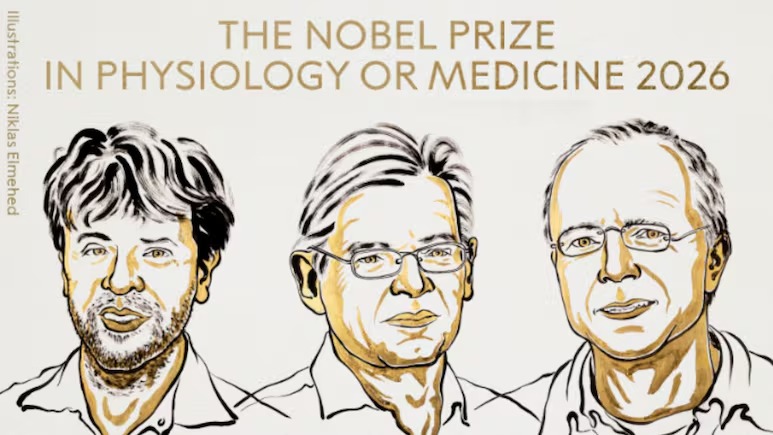
On Monday 5 October, the Nobel Assembly at Karolinska Institutet decided to award the Medicine prize to Karl Deisseroth, of Stanford University in the USA, as well as Peter Hegemann, Humboldt University in Berlin, and Georg Nagel, University of Würzburg, Germany.
The three scientists were recognized for their work related to the light-gated ion channels and the technique of “optogenetics” that lets scientists turn on or off particular nerve cells and neural circuits using light. The method is now being used around the world to study the brain in laboratories, the Nobel Assembly wrote.
How Light Became a Tool to Study the Brain
Hegemann started her work with the single-celled green algae and their reaction to the light. They discovered a blue-light activated protein that, when exposed to the blue light, triggers an opening of an ion channel and an electrical signal.
They found this and made other cells light sensitive. Later, Deisseroth took the gene that gives rise to the protein and created a technique that can turn on and off nerve cells in vivo in a mouse by triggering them with a light.
Over the years optogenetics has since provided new avenues for the study of the communication of groups of neurons and the influence of brain circuits on behavior and disease.
Nobel Prize Money and Week-Long Announcements
The 2026 Nobel Prize will be shared by the three laureates, with the sum total being three times the amount awarded in 2026 is equal to 12 million Swedish kronor, which is about $1.2 million. The awarding took place in the city of Stockholm which is at the start of the Nobel Prize week.
The Medicine prize will come next up, followed by the prizes in Physics and Chemistry, which will be announced later in the week. There are no specific dates set for the prize in Economic Sciences.