


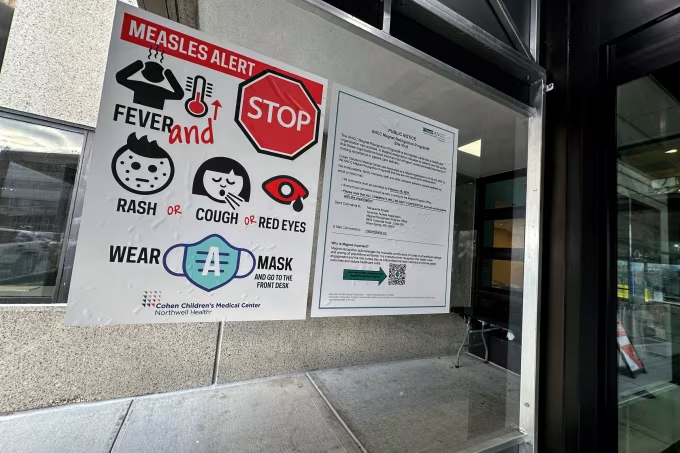
New York Governor Kathy Hochul declared a statewide disaster emergency on Monday following a measles outbreak, the first such declaration since 2025, when the cases began surging first. The state authorized additional health professionals allowed to administer measles, mumps, rubella vaccines as cases rise in rural communities.
Under the new order, registered nurses are allowed to order tests for suspected measles and house-sit vaccinating young children as young as two. It also requires all NY vaccine patients to be reported to the state or the New York Immunization Registry within 72 hours, while leaving adults consent for such reporting.
The emergency that took effect on Monday runs through November 4.
Until October 3rd, New York has reported 108 measles cases, including 92 since July 15, in underimmunized communities across 18 counties, higher than typical annual level, as per an executive order.
New York City reported seven cases, while 101 cases were spread across the state, the governor’s office said. Local health departments have administered more than 1,000 MMR doses in rural areas since July 15th.
It was 26 years ago that the U.S. state declared measles eliminated. For the quarter-century that followed, there were an average of just 180 cases per year nationwide, according to federal data. But measles made a historic resurgence in 2025. And the big break in New York is so far, by far the largest the U.S. has seen in the past two years.
In a similar case associated with an outbreak in West Texas last year, 762 cases were reported. At an outbreak in South Carolina, nearly 1000 cases were recorded before it was declared over in April.
Neighboring Pennsylvania is battling the fastest-growing outbreak with 977 cases and five deaths as of October 2, mostly in rural counties that border New York, the order said. Health officials in Pennsylvania said on Monday the state’s total count had passed 1,000, making it the largest outbreak in more than three decades.
The U.S. is having its worst outbreak since 1991, when nearly 3,900 cases were reported, according to the Center for Disease Control and Prevention.