


Nepal flash floods: Death toll rises to 469; Fresh flood risk looms as Khatmandu declines foreign rescue teams

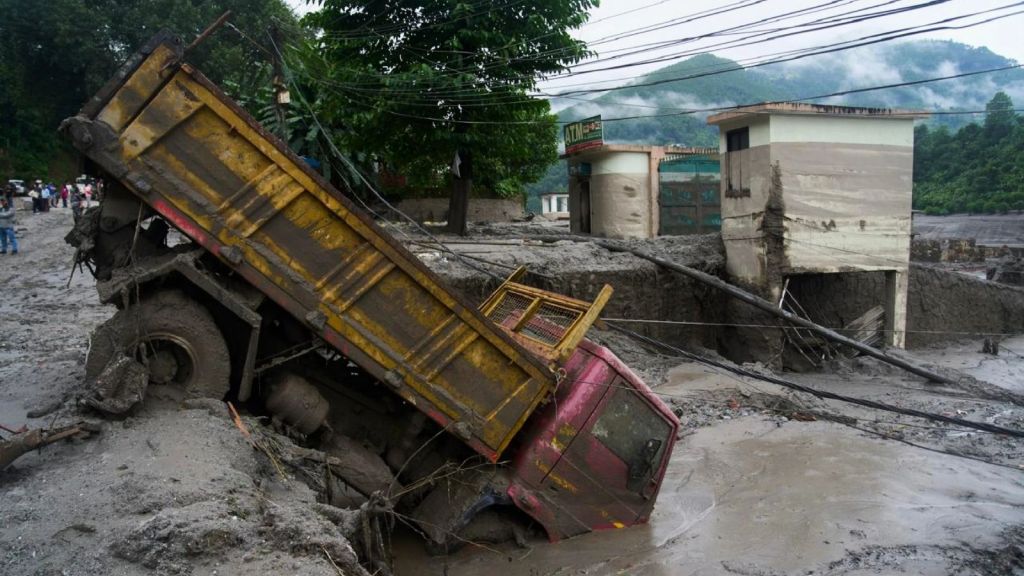
The death toll from the devastating flash floods in Nepal has risen to 469, according to Nepal Police, as rescue teams continue searching for survivors and those still unaccounted for. More than 1,300 people remain missing, while three deaths have been reported on the Chinese side of the border.
Rescue operations remain challenging due to the difficult mountainous terrain, bad weather, damaged roads and bridges, and widespread power outages. Teams are using heavy machinery, helicopters and sniffer dogs to search through mud and debris in the worst-hit areas.
The disaster has also raised concerns about fresh flooding, with authorities monitoring water bodies formed by debris blocking Himalayan river systems. China has warned that a dammed lake near the Nepal-Tibet border could breach as more water flows into it.
According to sources, Nepal declined foreign search-and-rescue teams offered by several countries, including neighbouring India and China, as well as the U.S., U.K., Sri Lanka, Japan, South Korea and Bangladesh, saying its own security agencies can manage the operation.
Nearly 517 foreign nationals remain missing, including 178 Indians, 65 Americans, 50 Malaysians, 55 Ukrainians, 33 Britons, 33 Australians and 25 Canadians, according to a local newspaper. China has also reported that at least hundreds of its nationals are out of contact.
Nepal’s decision followed recommendations from its army and police, with officials also citing coordination problems caused by the large influx of foreign rescue teams during the 2015 earthquake.
The ministry has set up an emergency response team to coordinate the search for missing foreigners, assist their families and provide condolence support.
However, foreign aid is still flowing into Nepal. India has sent over 47.5 tons of relief supplies and offered bridges, while the U.S., U.K., World Bank and Asian Development Bank have announced further support.
United States President Donald Trump said Washington has offered Nepal any help it needs following the devastating flash floods. Describing the destruction as brutal, he said, “Strong buildings were swept away. They were like toothpicks.”
He also announced that the U.S. is sending aid and has been in contact with the Nepalese leader to offer further assistance. He said that more than 50 to 60 Americans have been affected in the region and that authorities were still working to establish their whereabouts.
New York City Mayor Zhran Mondani expressed solidarity with the people of India and Tibet affected by the devastating floods along the Nepal-China border, sharing a message in Tibetan. He said hundreds of people had lost their lives in the flooding, while many others were still searching for safety.
Meanwhile, a new barrier lake has formed near the Nepal-Tibet border following the deadly floods that swept through the region. Chinese authorities estimate that the lake holds around 2 million cubic metres of water and warn that another 3 million cubic metres of water could flow into it over the next three days, raising concerns about a possible breach.
The lake has formed near the confluence of the Shoken Khola and Purepu Sangpo rivers, which flow into Nepal as the Bhote Koshi. China is monitoring the lake and conducting flood simulations to assess the impact of a possible breach.
The warning comes a day after powerful floods hit Rasuwa district in Nepal, sweeping through the area around Rasuwa and Siapurbesi, damaging roads and washing away bridges and buildings.
The bordering Indian state of Uttar Pradesh has intensified flood monitoring in Maharajganj and Kushinagar following the devastating floods in Nepal. Authorities are keeping a close watch on the Gandak and other rivers flowing downstream from Nepal, while vulnerable villages have been put on alert and rescue teams have been placed on standby.
The UP government has deployed a 32-member SDRF platoon and 22 PAC personnel in Nepal for relief and rescue operations.
In the state, officials are monitoring river levels, rainfall and water discharge, particularly around the Valmikinagar barrage, where all 36 gates have been opened. Arrangements have also been made to evacuate residents to safer places from vulnerable riverside areas.
If water levels rise sharply, rescue boats carrying water and other essential supplies have been kept ready.If you want, I can also give this a more polished newsroom-style version while keeping all the same facts and information.