


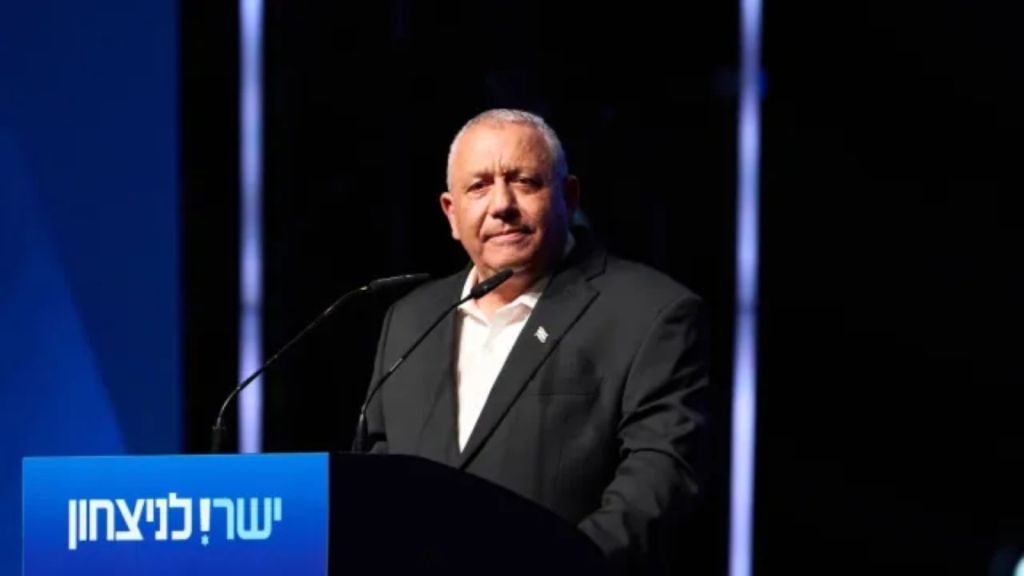
Deliberations on the formation of the Israel’s next government are set to begin at President Isaac Herzog’s office on Wednesday, with the Yesh party Leader Gadi Eisenkot expected to secure more recommendation than the current Prime Minister Benjamin Netanyahu, according to reports.
The four parties belonging to the Change Bloc, which together hold 48 seats in the 26th Knesset, have announced that they will recommend Eisenkot for the first mandate. Netanyahu is expected to receive the backing of four of the five parties that contested the election alongside him, representing 46 lawmakers.
The support of United Torah Judaism remains uncertain, with the party facing pressure to recommend Netanyahu. Political sources said Netanyahu and his team have been holding intensive talks to secure its backing.
Meanwhile, Ra’am and the Joint List are expected to coordinate their decisions with Eisenkot. They could recommend him or abstain, depending on his preference. The possibility of either party backing Netanyahu is considered low.
The Joint List, the political alliance of Arab parties, has condemned what it described as a campaign of political persecution against former party leader Ayman Odeh, after Hebrew media identified him as the senior Arab lawmaker suspected of receiving hundreds of thousands of shekels in cash from a foreign source.
The party called the allegations an escalation in what it termed a campaign of incitement against the Arab community and its leadership. It also accused Shin Bet chief David Zini, who was appointed by Prime Minister Benjamin Netanyahu, of acting as a political arm of the government.
Referring to the record turnout among Arab voters in last week’s election, which resulted in Arab-led parties securing 19 seats in the Knesset, the Joint List said threats, investigations and intimidation would not silence the community or undermine its political representation.
Earlier in the day, Central Election Committee chairman and Supreme Court Justice Noam Sohlberg presented the results of Israel’s October 27, 2026, elections to President Isaac Herzog at an official ceremony at the President’s Residence.
Speaking at the ceremony, Sohlberg warned that attempts to question the election results posed “a real danger” to Israeli democracy. He reiterated that even if allegations of electoral fraud were proven, the scale of any irregularities would not be sufficient to change the outcome of the election.
Sohlberg was referring to ongoing investigations into alleged electoral fraud. Likud and other coalition parties have argued that the investigations should have delayed the publication of the election results.
“In recent days, we have heard voices trying to cast doubt on the election results and to undermine their legitimacy. This is a real danger,” Sohlberg said.