


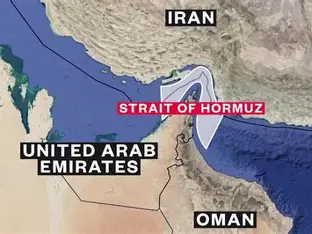
Tehran: Amidst the ongoing negotiations, approvals and rejections, Iran introduced a new system under which vessels seeking to pass the strategic waters will have to pay a toll. According to the local agency that provides news intelligence on maritime trade and shipping, the Persian Gulf Strait Authority (PGSA) has introduced a new framework requiring ships to obtain transit authorization and pay toll before entering the Strait of Hormuz
How the permit process works
The vessels seeking transit through the water channel will have submit required details. A form named ‘Vessel Information Declaration’ has been cicrulated by the authorities which needs to be submitted with detailed record of the owners, ship insurance, crew details and the indented transit route. The form has 40 questions pertaining to the owner, any previous name of the vessel, country of origin and destination, nationalities of the vessels registered ownerd, operators and crew besides cargo manifests.
On Tuesday, Iranian English-speaking broadcaster Press TV also reported that Tehran had built a “system to exercise sovereignty over the Strait of Hormuz” and that ships passing through the strait were sent “regulations” from the email [email protected].
Once the clearance code is issued, the ships are hailed via VHF radio and will be escorted by a IRGC pilot boat to avoid violation of approved corridor. Authorities have warned against incomplete or improper information being submitted.
So far, the Islamic Republic has not issued any official list of permitted and blocked nations. However, the former has warned countries supporting US Sanction against Tehran will face difficulties in gaining access to the channel.
“We warn governments, including microstates like Bahrain, that siding with the US-backed resolution will bring severe consequences. The Strait of Hormuz is a vital lifeline; do not risk closing it on yourselves forever,” wrote Ebrahim Azizi, head of the Iranian parliament’s national security commission on X.
Tehran has choked the vital waterways since the start of Middle East war in February, allowing only selective nations to bypass their cargo’s unleashing the biggest oil supply in the history. Over 95 % of traditional traffic across the waterways has vanished, with daily transits dropping from 100 to just 5 or 6.
Join our whatsapp group for Latest updates
Click Here for Chhattisgarh News
Click Here for Entertainment News