


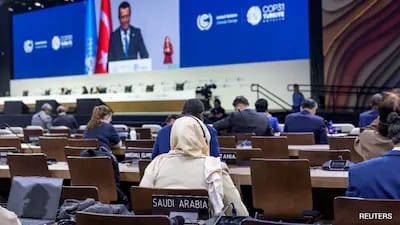
COP31 in Antalya, Turkey ended up racking up long hours at the negotiating table as fossil fuels controversy was set to escalate and a few nations blasted Saudi Arabia for disproportionate power play.
Europe, the small island states, Latin America, Asia and Africa party delegates said they had regular access to the leadership of the conference while smaller and climate-vulnerable countries were having difficulty gaining access to Turkey or Australia, the two presidents of the talks.
Negotiators said that Riyadh was one of the main actors in opposing text that called for decreased reliance on fossil fuels. Their opposition is said to have been a major reason for the absence of any political agreement, the first since 2009.
The debate was over whether the final accord should specifically refer to oil, gas and coal, which scientists see as key contributors to global warming.
A final text that did not contain any reference to fossil fuels was rejected by the European Union, as well as by several small island countries and other countries particularly vulnerable to climate change. A meaningful climate agreement should involve the energy source that is a cause of greenhouse gases, they said.
The European Union’s climate change minister, Darragh O’Brien told that oil-producing countries were having too much influence over the talks.
When asked about Saudi Arabia’s part in the talks, O’Brien declared this COP31 to have been “hijacked by some oil states.
The developments came as a fresh impetus to the worries out of control of fossil fuel generating nations in international environment talks and the difficulty of developing support for decreasing total worldwide emissions.