


Parliament Monsoon Session : Opposition prepares to corner Centre over Ram Mandir theft, NEET and E20 issues

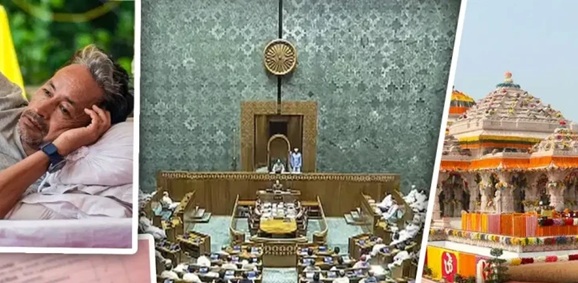
The Monsoon Session of Parliament begins on Monday with the stage set for a heated face-off between the government and the Opposition over a range of issues like Ram Mandir donation theft, NEET paper leak, the CJP protest and the E20 petrol policy, while the Centre has warned against disruptions, saying parties that stall Parliament ultimately pay a political price.
During Sunday’s all-party meeting chaired by Defence Minister Rajnath Singh, several Opposition leaders demanded discussions on the Ram Mandir donation controversy, the alleged NEET-UG paper leak and the ongoing CJP-led protest at Jantar Mantar.
Congress leaders Rahul Gandhi and Mallikarjun Kharge also wrote to Prime Minister Narendra Modi seeking accountability and an inquiry into the alleged Ram Mandir donation irregularities. Samajwadi Party MP Dharmendra Yadav was among those who raised the issue during the meeting.
RSP MP N K Premachandran called for a structured discussion on the NEET paper leak, arguing that examination irregularities affect lakhs of students across the country.
Parliamentary Affairs Minister Kiren Rijiju said Opposition parties have every right to raise issues but cannot dictate the government’s agenda. “Congress has every right to raise its demand, but it can’t force the government,” Rijiju said, urging parties to adopt a consultative approach rather than a “my way or highway” attitude. He also warned that parties disrupting Parliament have historically paid a political price, while stressing the importance of meaningful debates during the session.
The Centre has listed eight bills for consideration during the session. However, the legislative agenda does not mention the proposed constitutional amendment to increase the strength of the Lok Sabha or the implementation of one-third reservation for women from 2029.
Rijiju, however, said new legislative business could still be introduced during the session after discussions in the Business Advisory Committee (BAC), in accordance with parliamentary rules.
Apart from domestic issues, BJP ally and JD(U) MP Sanjay Jha sought a discussion on the West Asia crisis, crediting the government with managing India’s energy supplies and limiting the impact of global disruptions on domestic fuel prices.
He argued that India had effectively diversified its energy sources despite having no direct role in the conflict.
Meanwhile, Lok Sabha Speaker Om Birla appealed to all political parties during the BAC meeting to cooperate in ensuring the smooth functioning of Parliament throughout the session.