


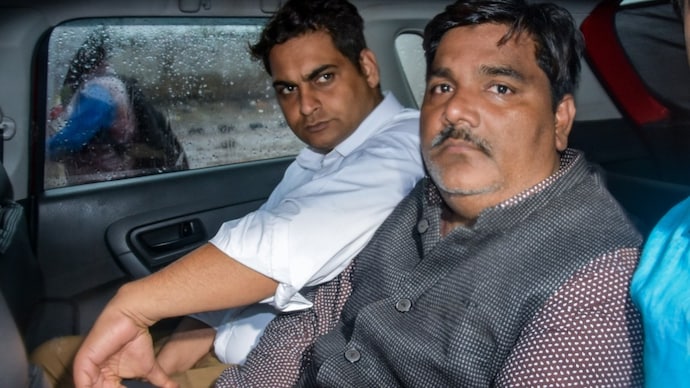
A Delhi court on Friday sentenced former AAP councillor Tahir Hussain and four other convicts to life imprisonment in murder case of Intelligence Bureau staffer Ankit Sharma. Sharma was brutally killed in 2020 North East Delhi riots in a conspiracy courted by Tahir Hussain, Nazim, Qasim, Javed and Anas.
While pronouncing the sentence, the court described the crime as “very serious” and observed that the incident had shaken the conscience of society. It said the manner in which the events unfolded forced society to reflect on the brutality witnessed during the communal violence. Highlighting the way the offence was carried out, the judge noted the murder that was committed during the communal riots was utmost brutality solely on the victim’s religion.”
The manner in which the crime was committed was of utmost brutality, done solely on the ground of religion,” the court observed. It pressed that the way Ankit Sharma’s body was dragged like that of “an animal up to the Chand Bagh pulia” before being thrown into a drain was barbaric, committed to “nauseating and sickening” remarked the judge while delivering the sentencing order.
Rejecting the death penalty plea, the court held that the prosecution had not placed any material on record to establish that the five convicts had a violent disposition or a continuing propensity to commit crimes. It also noted that none of them had any previous criminal record. It asserted that the convicts could be disciplined and made to follow the rule of law. It further said that although there is no legal bar on imposing the death penalty, such punishment require circumstances beyond participation in an unlawful assembly and commission of the offense.
Meanwhile, reacting to the verdict, Delhi Minister Kapil Mishra has demanded death penalty in the appeal, saying the life sentence marked only the beginning of justice and expressed hope that the punishment would be enhanced by the High Court. Taking to X, formerly known as Twitter, Mishra said, “Life imprisonment for Tahir Hussain is the beginning of justice. The manner in which Ankit Sharma was killed, and the fact that his body was repeatedly stabbed even after his death before being thrown into a drain, certainly makes this a ‘rarest of rare’ case.”