


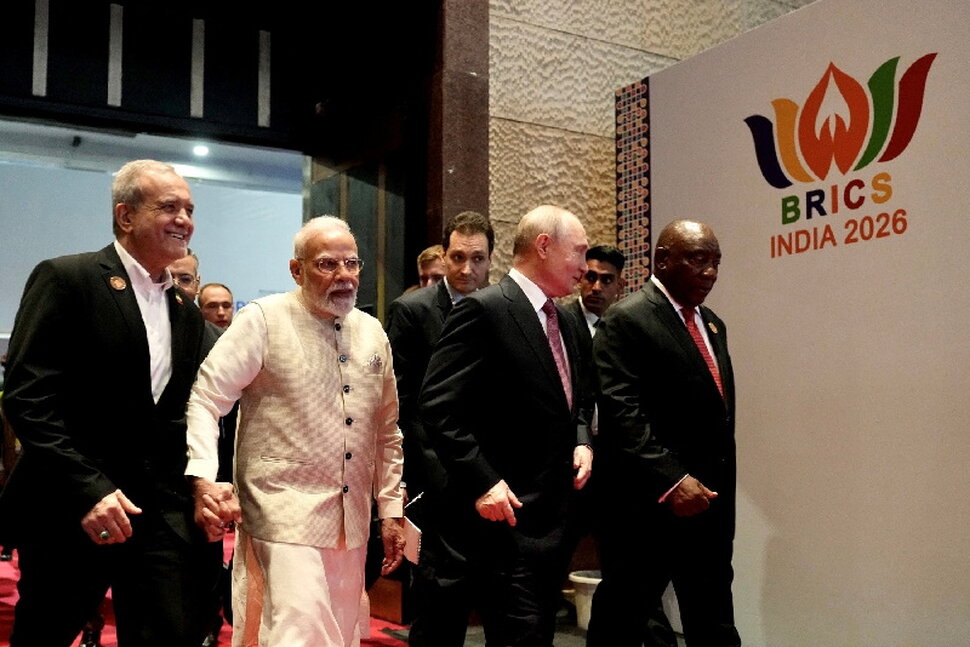
A historic diplomatic achievement of the BRICS group of emerging economies has been that it was able to reach an agreement around a joint declaration during its summit in New Delhi. The pact coincided with the leaders’ presence at the discussions, which sought to boost BRICS’ role in international affairs.
The sources indicated that on the declaration there were some delicate international issues at stake. India was significantly involved in making consultations and achieving consensus. The talks were fraught with difficulties, especially in the tense climate of the Gulf region, where tension and conflict continued.
There was great focus on locating languages that would be acceptable to both the UAE and Iran that could be used on and endorsed byeither sides’ agendas regarding the Middle East crisis. The declaration draft is not likely to refer to any country specifically, but will probably decry unilateral aggression.
The development follows negotiations between the foreign ministers of the BRICS group in New Delhi in May, which were stalled due to differences between Iran and the UAE.
The summit opened with a Prime Ministerial address from Prime Minister Narendra Modi which expressed BRICS’s evolution as it should now “translate its unity and consensus into tangible outcomes on the world stage”. He has also demanded more presence of the Global South in international power-making.
Strengthening BRICS is a need of the hour, and at the same time it is important to decide the direction for global reform,” Modi added without giving any details, saying that all countries must have their voice and stake in the global future.
Modi also called for reform of the U.N. Security Council, calling for India, as well as other emerging powers, to be granted permanent seats.
BRICS nations seek fairer international balance, Xi tells them during his talks.
The bloc’s members are Brazil, Russia, India, China, South Africa, Egypt, Ethiopia, Indonesia, Iran and the UAE. India is also working towards trade cooperation between the member countries of BRICS, liberalizing trade restrictions and enhancing business opportunities through their leadership.
The joint statement does not have any immediate impact on the geo-political landscape but is imbuing the emerging powers with a level of joint unity that is important.