


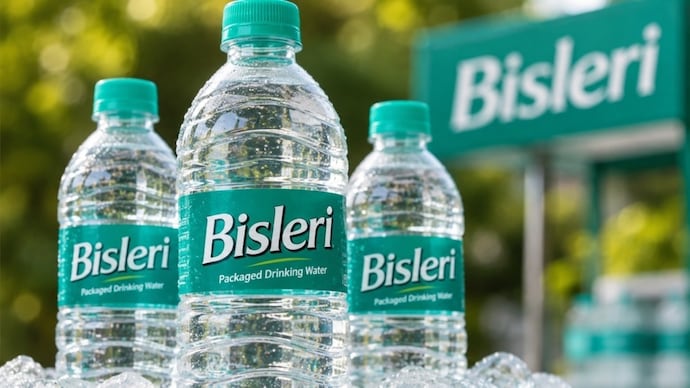
Maintaining that its drinking water products are safe for consumption, Bisleri on Tuesday took to social media to clarify the FSSAI’s sale prohibition.
In its message on Instagram, the company said that the food regulator’s sale prohibition applied only to one batch, G0270, manufactured in Goa on September 27, 2025.
“There are currently no stocks of this batch in the market, the company said”. It stated that the food regulator had collected six samples of its water for testing, with all six passing the initial test, while one sample was flagged during the retest for having polynuclear aromatic hydrocarbon (PAH) content above 0.144 milligrams per litre in the batch.
According to the food regulator, PAH content at detectable levels is not permitted in drinking water. The bottled water company stated that another sample from the same batch cleared all the parameters. The packaged drinking water firm further stated that it highlighted this discrepancy and requested retesting from the FSSAI in February 2026.
“Bisleri will continue to cooperate with the FSSAI and defend its position in any proceedings. Since then, there have been no adverse incidents of PAHs found in any sample tested by FSSAI across Bisleri plants,” the release said.
The Food Safety and Standards Authority of India (FSSAI) said on Sunday that it had granted sanction to launch prosecution against Bisleri International under the Food Safety and Standards Act, 2006. The sample was collected from the company’s Goa plant on September 30, 2025. The first test found bromate at 12 micrograms per litre against the prescribed limit of 10. Later, a referral laboratory found bromate within the limit but flagged PAHs and declared the sample unsafe.
In its response on Monday, Bisleri said that an independent FSSAI-approved laboratory found bromate within the limit. It also claimed that it had received no formal notice and that the sample dated back about 14 months. According to the International Agency for Research on Cancer (IARC), bromate, which is formed during water treatment, particularly when ozone is used to kill microorganisms, is classified as Group 2B, or possibly carcinogenic to humans, based on animal evidence.
It has maintained that its products are safe for consumption and that the regulatory action should be viewed in the context of the specific batch under scrutiny.