


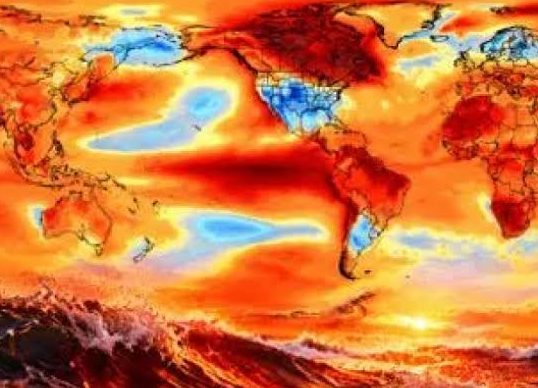
Meteorologist Ryan Maue shared a global forecast map this week and described Earth as almost entirely in red. Weather expert Leon Simons went further and called it a “super-duper El Niño.” The data backs up the alarm.
The UN’s World Meteorological Organization (WMO) says this El Niño could rank among the strongest since at least 1950. It is expected to peak around December and last through February 2027, with a near-certain chance of that. Climate scientist Zeke Hausfather says the key Pacific region has run 3.4°C above normal, higher than any earlier El Niño on record. WMO chief Celeste Saulo explains that El Niño doesn’t create new heat. It releases heat that has built up under the ocean surface, on top of human-driven warming.
India has reason to pay attention. The 2026 monsoon ended about 13% below normal, the weakest in over a decade, with East and Northeast India worst hit at 26% short. The World Bank now says the deficit looks bigger than first expected, and that it will cut farm output and rural demand while pushing food inflation higher.
External Affairs Minister S Jaishankar has already raised the alarm. Speaking at an Asia Society event in New York, he said India and others face serious fertilizer shortages as conflicts hit producers in the Middle East and Russia. With the super El Niño added, “there is going to be a major food crisis” ahead, he warned. The opposition blamed the government for acting too late.
Prices are already moving. Inflation has risen for ten straight months and crossed the Reserve Bank’s 4% target in August. Farming is about 17% of the economy but supports roughly 46% of the workforce, and India is a top exporter of rice and sugar. Rural India also drives nearly 40% of fast-moving consumer goods sales.
Verisk Maplecroft lists India, Indonesia, Pakistan, Bangladesh and the Philippines among the countries most exposed to food insecurity, and to unrest if prices keep rising.