


Imagine telling an AI assistant, “Order my groceries for this week,” and instead of simply suggesting products, it searches for the items, compares options and eventually makes the payment for you.
That may sound like something from a science-fiction film, but India is already moving towards this kind of AI-powered shopping.
The National Payments Corporation of India (NPCI) is developing a system to verify and monitor AI agents that could make payments on behalf of users through the Unified Payments Interface (UPI). The proposed framework, called the Unified Agentic Protocol, is expected to include a registry of approved AI agents.
What Is An AI Agent?
Compared with a regular chatbot, an AI agent is a digital assistant that can not only give you information but also perform tasks for you.
The difference between a chatbot and an AI agent is the ability to take action. A normal AI conversation may end with an answer on your screen, while an AI agent can potentially execute a task by interacting with applications, websites or payment systems.
For example, instead of asking AI to find you the cheapest grocery delivery options and then completing the task yourself, you could direct an AI agent to look for the cheapest options and place an order by itself.
India has already seen early experiments in this direction. A Razorpay-NPCI initiative has enabled agentic payments in a closed pilot involving AI-native experiences and services such as Zomato, Swiggy and Zepto.
Why Does UPI Need A New System?
The biggest question is not whether AI can understand a payment instruction. It is whether the financial system can trust an AI to act on that instruction safely.
NPCI’s proposed registry is intended to help identify and authenticate agents before they can conduct transactions. The initial focus is expected to be on smaller, frequent payments, with the framework potentially expanding to cards, bills and other forms of payment later.
What Could Go Wrong?
Giving an AI agent permission to make UPI payments is very different from simply asking it a question. Once an agent is allowed to act, a mistake could potentially lead to a real financial transaction.
For instance, you may tell an AI agent to “order the usual groceries under Rs 2,000”. If it misunderstands which products you mean, chooses a more expensive seller or places the order twice, the mistake could result in an actual payment.
There is also the risk of an agent being manipulated. If a website, malicious message or any other piece of information tricks the AI into following a malicious instruction, it could potentially perform an action that may be harmful to the user.
Another important question is consent. If you have given an AI permission to make payments up to a certain limit, where does your responsibility end and the AI provider’s responsibility begin when something goes wrong?
There could also be disputes over unauthorised or mistaken transactions. If an AI agent makes a payment that the user did not intend, it will be important to know whether the bank, UPI platform, merchant, AI company or the user bears the loss.
This is why agentic payments need stronger safeguards than a normal UPI transaction. Spending limits, clear user approval, agent authentication, transaction alerts and the ability to immediately stop an agent could become crucial safeguards.
What Does It Mean For Indians?
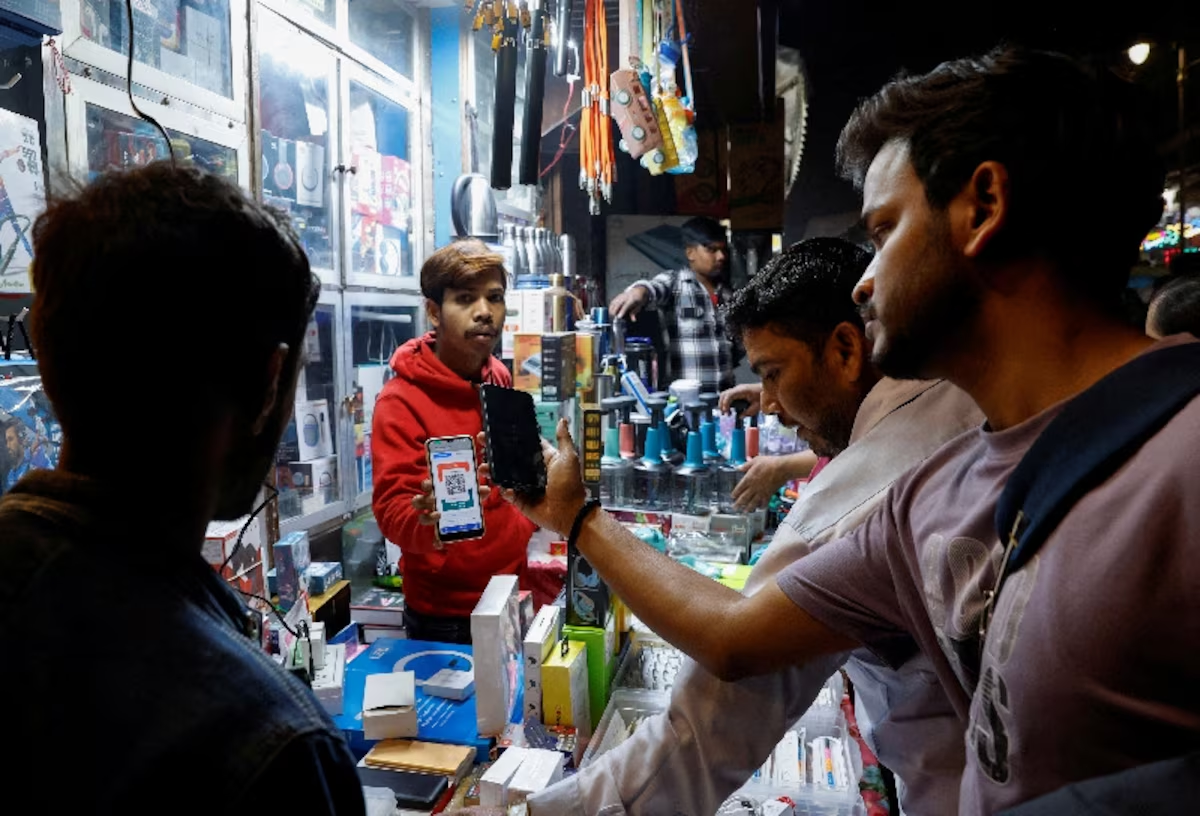
For Indians, UPI isn’t just another payment platform. It is the only payment system millions of people rely on from buying vegetables to paying electricity bills.
AI-powered payments could make digital transactions even more convenient. However, this convenience could also come at the cost of control.
India has spent years building trust in UPI by making digital payments quick, simple and accessible. The next challenge will be making sure that when an AI starts making decisions on a user’s behalf, that trust is not compromised.
The question, therefore, is not simply whether an AI can pay for you. It is how much control you are willing to give it — and whether India’s payment system can ensure that the final decision, and the money, remain in your hands.