


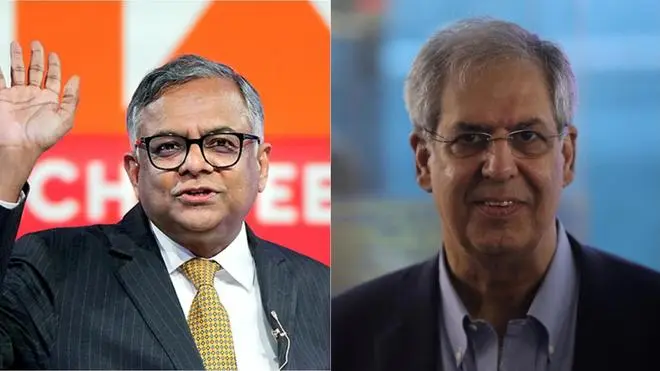
When N. Chandrasekaran’s board voted 4-1 last week to hand him a third five-year term as chairman, nobody expected the lone dissent to blow up into a full-scale corporate war. But it did — because that vote came from Noel Tata, chairman of Tata Trusts, the philanthropic body that owns roughly two-thirds of Tata Sons.
Tata Trusts didn’t just object. It declared the whole reappointment void.
The argument hinges on a clause buried in Tata Sons’ Articles of Association — rules adopted back in 2000, largely to protect the Trusts’ influence as their shareholding thinned over time. Article 104B lets the Trusts nominate up to a third of the board. Article 121 goes further: any resolution needing board approval also needs the affirmative backing of a majority of those Trust-nominated directors. Right now, there are just two such directors — Noel Tata and Venu Srinivasan. Tata voted no. Srinivasan voted yes. A straight split, Tata Trusts argues, which means that bar was never cleared, whatever the overall board tally said.
Tata Sons sees it differently. In its telling, this was simply a boardroom deadlock, which the meeting’s chairman was entitled to break with a casting vote. Tata Trusts calls that reading flawed too, insisting a casting vote only kicks in when the full board is evenly split — not when it’s the smaller pool of Trust nominees that disagrees among itself.
Here’s where it gets almost poetic. Both sides are now leaning on the same 2021 Supreme Court judgment — the one that cleared Tata Sons of wrongdoing in ousting Cyrus Mistry. That ruling upheld Articles 104B and 121 as legitimate, hard-won protections for the Trusts. Back then, it was Tata Sons defending those articles in court. Today, Tata Trusts is turning them against the very board that once relied on them.
Even the lawyers have swapped sides. Abhishek Manu Singhvi, who fought — and won — for Tata Sons against Mistry, is now arguing for the Trusts. Harish Salve is expected to represent Tata Sons this time around.
With Tata Trusts preparing to head back to the Supreme Court, the group’s succession story is far from settled. What was meant to be a routine reappointment has instead reopened a fight everyone assumed was closed five years ago.