


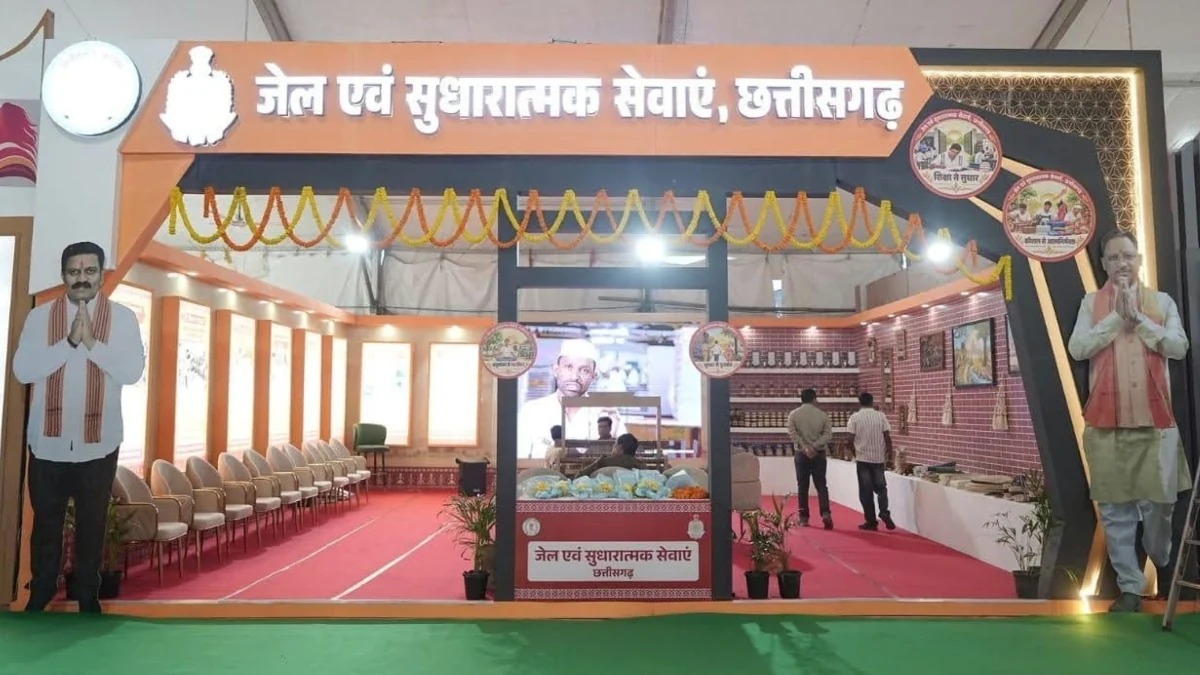
An exhibition, organized by the Department of Prisons and Correctional Services, at Chhattisgarh Rajyotsava 2026 is highlighting the value of education, skill development and creative activities in enabling prison inmates to regenerate and be re-absorbed into society’s mainstream with dignity.
The stall is now a popular destination for tourists showcasing photos and handmade items made by the state’s producers of art and objects from their abilities and job training and rehabilitation programs in the state’s jails. The exhibition gives the idea that prisons can not only be a place of chastisement but also a centre of reform, education and personal development.
The exhibition also puts emphasis on the ‘Nishchay Programme’, a scheme to ensure that young prisoners are linked to self-employment and self-reliability. The program teaches prisoners how to cook fast food and other work-related skills, including manufacturing food.
Some of the goods produced by inmates are fine pickles made by female inmates and decorative idols of Lord Ganesha and Maa Durga. The efforts are aimed to provide practice-oriented skills that can enable convicts to gain employment and create self-dependable livelihoods upon their release from the prison.
Various items are available at the stall, such as paintings, jute products, mustard oil, snacks, pickles and LED-products. The products exemplify how education and continued work can benefit inmates in acquiring marketable skills.
The handmade products displayed during the Mainpat Festival are also on display, showcased by Chief Minister Vishnu Deo Sai, demonstrating the efforts made to promote creativity and rehabilitation.
Another integral component of the exhibition is smart classrooms as well as educational and study facilities (digital) made available by educational institutions. The purpose of these initiatives is to make learning more available to inmates, encourage positive thinking and foster personal growth.
The success of the young prisoner at Central Jail Raipur is one of the highlights at the exhibition Vasudev Chauhan, who has memorised 700 verses comprising all verses in the 18 chapters of Shrimad Bhagavad Gita. His success is proof of the importance of dedication, commitment and ongoing education in achieving change.
A wandering handloom is also more likely to capture visitors’ attention by presenting their vocational training programs. Open prisons and programmes for social reintegration and self-reliance and behavioural change are further emphasised at the exhibition.
The department is striving to make it a priority that inmates are given opportunities to gain knowledge, learn practical skills, and build a positive future after leaving prison through these efforts.