


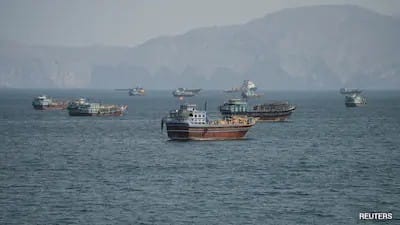
Limpet mines, tiny cone-shaped mines that attach to rocks using a mussel’s sticky foot, have been in the spotlight following Friday’s attack on a Panama-flagged crude oil tanker by two of them in the Strait of Hormuz. The first attacks caused explosions and engine room fire that left the ship momentarily helpless, while 27 Indian crew members were on board.
The incident, reportedly, was the first time that limpet mines have been used since the U.S.-Iran war started.
What is a Limpet Mine?
In contrast to the traditional surface-to-sub-surface deployment of naval mines, limpet mines attach to an object’s surface directly, in this case to a ship’s hull. Usually they are designed to only be able to inflict a ‘mission kill’ on a vessel rather than sinking it.
These are attached by magnets and have computer-controlled detonation systems according to Naval Technology. As they are small in size and relatively lightweight, they can be carried and deployed easily. They can be attached on a vessel’s hull by a swimmer, diver or trained frogmen.
Why are they dangerous?
Iran’s Revolutionary Guards said three oil tankers were held up from departing, but were blocked by “unspecified incidents” or “struck mines. Two tankers have had incidents and have been detained in the waters south of the strait as they attempted to pass the strait on an unauthorised path, the IRGC said in its statement.
The attack has prompted concern over the commercial shipping of the critically important waterway.
A small boat can approach a tanker, implant explosives and retreat to an unknown destination, said maritime risk management firm from Greece, Marisks, adding this presents a huge security risk, especially in a busy shipping lane such as the Strait of Hormuz.
The incident underlines the dangers to vessels operating on one of the world’s crucial oil shipping lanes.