


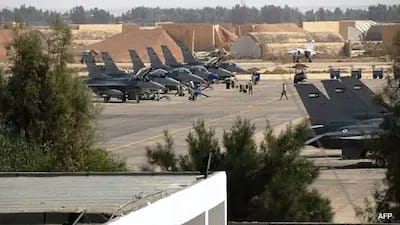
The U.S. and Iran have further tensions rising following the accusation by Iran’s Islamic Revolutionary Guard Corps (IRGC) that it launched a series of heavy missile strikes against a U.S. air base in Jordan.
The Muwaffaq Salti Air Base in Jordan is an important airpower base for the US military operations in the region and home to dozens of US warplanes. In response to the Iranian attacks, reports claimed US troops in Jordan fired over 30 Patriot interceptors.
It was the latest in an escalation of violence following five Iranian oil tankers attacked and sunk by the United States around the same time last week. Washington said the move is in response to an Iranian strike on a US Navy warship.
Iran then alleged that it struck a number of what it described as “enemy” targets in the United States and its allies. In a “punitive operation,” the Al-Azraq base in Jordan was subjected to a massive barrage of IRGC missiles, the group said.
In addition, Tehran asserted that it had also struck ships trying to pass through the Strait of Hormuz, and announced it would expand on a no-go zone the area has been under for months that encompasses the waterway.
After the barrage, Jordan’s military said its air-defence systems took out the incoming projectiles. Jordan identified 20 ballistic missiles, and destroyed and neutralized 18 of them, according to the official statement. The two other crafts claim to have settled in non-populated regions.
Iran Offers Conditions to End War
As the conflict turned into a war, Iran’s Revolutionary Guards insisted during the fray that the conflict can be made to end if Washington abide by Tehran’s demands. Among the demands reportedly were those related to the wars in Lebanon and Yemen.
The latest developments highlight the growing regional repercussions of the U.S.-Iran feud with the ongoing spread of military bases, business shipping routes, and countries throughout the Middle East.