


Devastation is engulfing the serene landscape of Devighat after the devastating floods in Nepal. The Trishuli is swollen now, and is striking with a muddy flow, as residents and buildings have been washed away.
There is evidence of everyone’s daily life, scattered in the silt up to about 20 metres away from the river. The adult’s slipper is partially buried in the mud and the smaller one seems to be the children’s. Lots of rocks and broken pieces lay beside the broken suitcase that is opened half-way and a guitar is also in between the rocks.
These humble objects are poignant reminders of the lives that once lived here only days ago.
Damage is far from just along the river bank. Homes have been completely knocked over and broken open or pulled down to their foundations within approximately 50-60 metres of the Trishuli. Further inland where there is more elevated land the damage has been far more extensive.
Another bridge, connecting both parts of Devighat, is also flooded. The only evidence of the old bridge is the ruins of the staircase leading upward to it, on top of a washed-out riverbank.
In the vicinity, the ruins of houses are visible, including iron beams sticking out of cracked concrete, and fragments of walls lying on the ground.
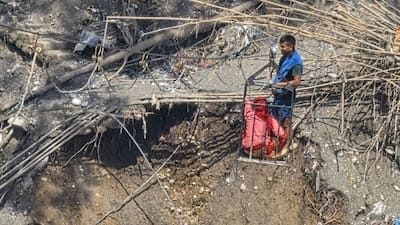
The missing bridge is being replaced by a 250-metre-long zipline which hangs above the Trishuli between the two sides. Even its unusual makes is a testament to the extent of the disaster. Ropes are attached to it one end at an iron rod left from a demolished house, and another end to a still-standing banyan tree.
The zipline is an improbable connection between the two banks and an extreme reminder of the span that once was there and that now exists.