


CJP protests FIRs: Was the facial recognition a ‘hit’ or ‘miss’? Questions raised over police identification

A face can be recognised, but can it prove where the person was?
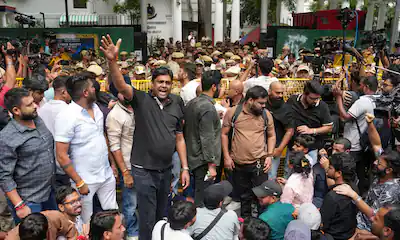
According to the data given by the police, which used the facial recognition system to identify people at the protest, some of those identified at the protest, as per official records, were already behind bars.
On the contrary a report into the Delhi Police’s use of facial recognition technology during the student protest at Jantar Mantar between July 20 and 26, people with criminal antecedents have been identified as present at the protest, in contrast to the records.
The Delhi Police, in its submission to the Supreme Court on Tuesday, said that its facial recognition system had identified 2,873 people with criminal antecedents at the protest site. But a scrutiny of police, jail and court records found that at least 25 of those identified were in jail at the time when they were supposedly spotted.
The report looked more closely at 205 people identified by the system who were accused in serious cases, including murder, rape, crimes against children and attempt to murder. Nearly 17 of the total are facing murder charges, 4 arrested under rape charges and four facing attempt-to-murder charges were, according to jail records, already lodged in Delhi’s Tihar, Mandoli or Rohini prison complexes when the system supposedly identified them at the protest.
So, what could explain the discrepancy?
Facial recognition technology works by comparing faces captured by a camera with images stored in databases. A match, therefore, indicates that the system found sufficient similarity between two images. It does not by itself establish that the person who was spotted or identified by the match was physically present at the location.
The Delhi Police said its 2,873 identifications were based on matches with the official databases — 2,402 through its biometric Crime Kundli database Among the 205 people, as said by the report, are accused in serious cases including murder, rape, crimes against children and attempt to murder, 17 facing murder charges, four facing rape charges and four facing attempt-to-murder charges were lodged in Delhi’s Tihar, Mandoli or Rohini prison complexes, as per records.and 471 through criminal records.
It further clarified that verification was pending and that no action would be taken solely based on the facial recognition results.
The apparent identification of people who were in custody makes the verification crucial. While it raises the possibility of a glitch or perhaps a lapse in the system being used by the police, more importantly, questions are arising over how much confidence can be placed in this system to make the remaining identifications.
The technology, therefore, may be useful as an investigative lead, but penalising those involved in the Jantar Mantar cases based on a facial recognition hit cannot automatically be treated as proof that someone was present at the protest spot.