


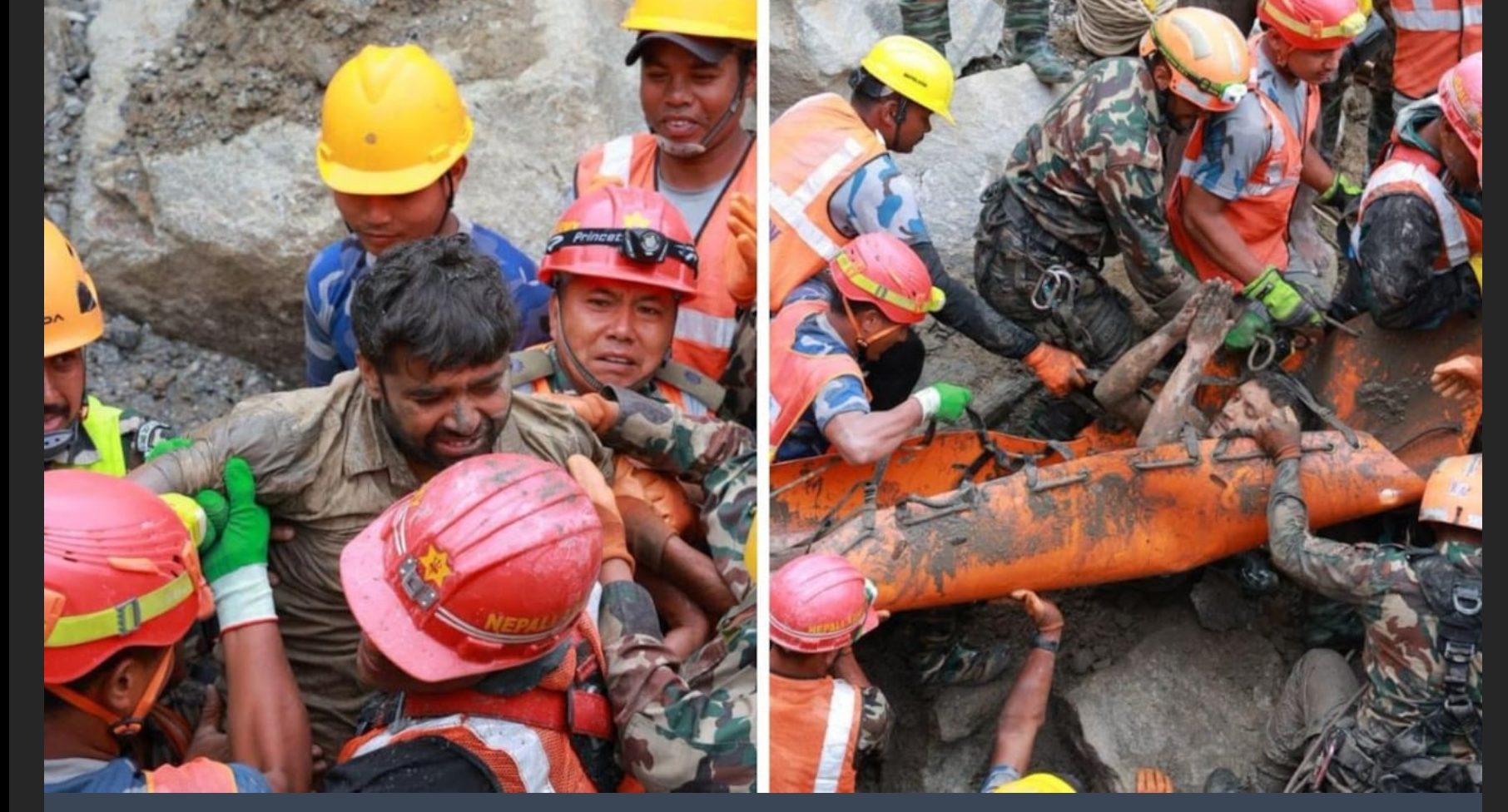
The rescue of two power workers from the Trishuli 3A tunnel site in Nepal is being described as an extraordinary rescue operation by renowned tunnel rescue expert Arnold Dix, who was guiding the rescue operations in Nepal remotely from Sydney.
Dix is popularly known for tunnel rescue operations after his contribution in the 2023 Uttarakhand tunnel rescue. In a press briefing, he called the rescue operation an enormous victory for the rescue team. He hailed the rescue as “an extraordinary operation” that brought back two people alive.
The Trishuli 8 tunnel at the hydropower plant was blocked following the apocalyptic flash floods in the Bhote Koshi River in Rasuwa on August 26, trapping nearly 900 workers inside.
Since then, the rescue teams, led by the Nepal Army, have been desperately looking for survivors and trying to clear the boulders and the slush that blocked the tunnel.
Friday, which marked the tenth day since the flooding in the Trishuli River basin, severely impacted multiple power plants. A massive operation was launched to rescue those workers trapped inside the tunnel, with hopes of survivors.
Rescuers have been spending days clearing tons of debris using excavators and simultaneously pushing in pipes to pump air inside and prevent the air from turning toxic.
Hailing the rescue operation, Dix said, “This rescue rewrites the textbooks as never before have we had a situation where multiple power stations have been destroyed and rescue ops have been mounted across several tunnels. This is something the world has never done before.”
Explaining how the floodwaters surged, Dix said workers are likely to have run through the tunnel, essentially after being chased by the rising water, followed by boulders, sub-sediment and mud. A blockage of the rocks and debris would have ultimately sealed the tunnel.
Though they were safe from drowning, the conditions inside might have been terrible, he added. He went on to explain the scale and challenges of the mission.
The workers rescued survived ten grueling days without light and relying on the little water and food supplies that they could find inside.
Around 150 workers remain missing as rescue operations continue at several sites across multiple impacted power plants and the river valley.