


‘Contribution not charity’: Says Nepal minister on financial assistance from India,China and US

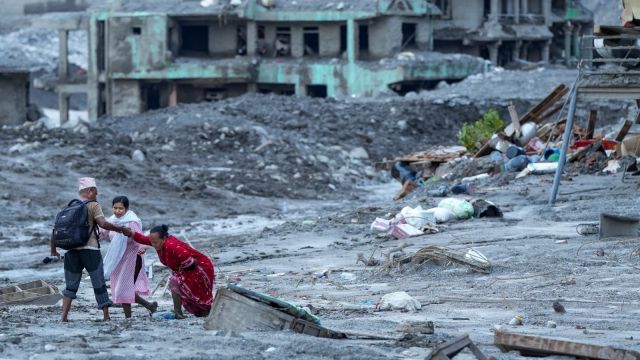
Nepal is seeking climate-related compensation from its neighbouring states, India and China, as well as the Western power United States, which the Himalayan nation has named among the major greenhouse gas emitters responsible for the deadly flash flood that occurred on August 26.
Launching a diplomatic pitch to seek international monetary assistance, Nepal Foreign Minister Shishir Khanal asserted that post-disaster aid should be treated as a matter of moral liability and not charity. In an interview with a national television channel, the minister pointed out that despite contributing virtually negligible greenhouse gas emissions, Nepal is bearing the disproportionate consequences of global warming, including rapid glacier melt and extreme mountain disasters.
“We are paying the ultimate price for a global crisis we did not create. The rapid melting of glaciers and these catastrophic mountain tsunamis are direct consequences of global climate change,” he said, according to excerpts of his interview published by the local news agency.
The death toll in the apocalyptic flash flood that devastated three districts in the mountain nation continues to become clear. As of Wednesday, Nepal’s disaster authority said the death count had risen to 1,114 while 3,916 people remain missing.
According to Nepal’s Department of Hydrology and Meteorology, moderate rainfall is likely this afternoon in Rasuwa, Nuwakot, Dhading and surrounding areas affected by the Bhote Koshi flood. The rain could hamper ongoing relief and rescue operations today.
Earlier on Wednesday, India dispatched its fifth contingent, carrying an 11-member rescue team with specialised equipment and 5.5 tonnes of essential medicines.
Meanwhile, rescue teams are struggling to reach around 100 hydropower workers believed to be trapped inside tunnels buried under mud and debris. Though hopes of finding survivors are fading, only bodies have been recovered so far. The excavation process has also been hampered by water seeping into rescue shafts.
The August 26 disaster began as a chain of events high in the Himalayas, as a glacier collapsed, sending large amounts of rock, ice and melted water into the valley. This triggered powerful floods downstream, resulting in a surge of water and debris that entered rivers flowing through valleys in Tibet and Nepal, causing them to rise rapidly.
The floodwaters swept away infrastructure, buildings, roads and bridges, carrying mud, rocks and debris downstream.