


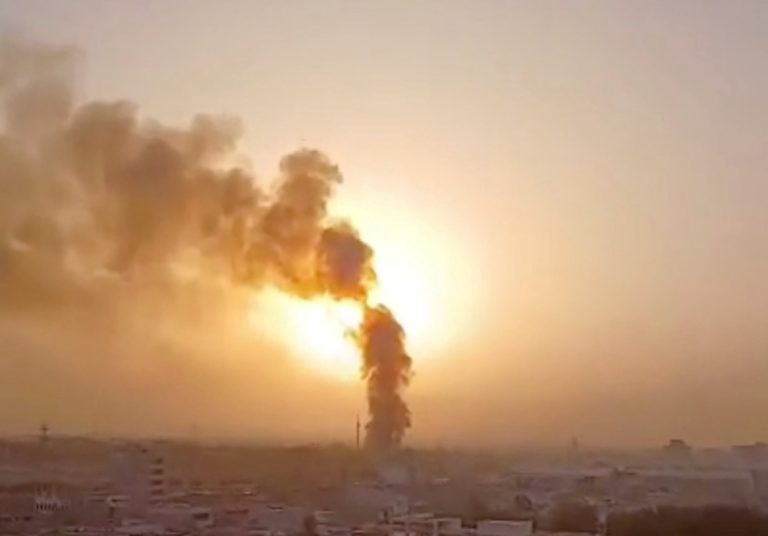
Iran has stepped up its operations against U.S. military bases in Jordan, alleging on Sunday that it had fired drones and missiles at U.S. posts as a response to an anti-Iran air strike carried out on Thursday by the U.S. and Israel over the Iranian navy base on Larak Island.
IRGC reportedly struck the equipment, maintenance facilities and territories in which the “enemy fighter jets” were located at the King Hussein and Al-Azraq bases in addition to technical and maintenance facilities. Iran’s claim was they were able to destroy a lot of targeted facilities.
The attack took place after Hezbollah was targeted on Larak Island on Friday, which is near the strategically vital Strait of Hormuz by the U.S. military. According to the incident, it was Iran’s first attack on the United States since the end of July.
The IRGC says in a statement that military actions could not have affected Iran’s power to dominate the Strait of Hormuz and that it reserves greater measures of action in the event of continuing aggression.
Tensions between Tehran and Washington have been further heated by the latest developments and the strategic waterway remains the heart of the conflict. A long duration of escalation in the Strait of Hormuz may possibly have far-reaching consequences for regional security and world energy sources.
As tensions persist with Tehran, U.S. President Donald Trump put into force his backing of Israel in a desire to stop Iran from ever getting the bomb. Trump told Fox News that Iran would be supplied with it if its leaders wanted it and that they “must not” be allowed to get it.
Iran’s leadership was “very violent” and “evil” and “the day after” a nuclear-armed Iran may be “catastrophic” to Israel, the Middle East and the U.S. and Europe, Trump said.
The Iranians insist on retaliating and the United States continues to stand firm on the nuclear issue with Tehran, so the situation between the two countries remains highly tensioned.