


Tehran condemned proposed fresh US sanctions, while tensions over the strategically vital waterway and Iran’s oil trade continued to escalate.
Iran’s security chief Mohsen Rezaei has warned Gulf countries against joining US sanctions against Tehran, saying they would be considered an enemy if they do so, adding that Tehran would target their interests in retaliation.
He accused the US President of undermining global nuclear security, alleging that Washington’s military aggression against Tehran has other nations to seek atomic weapons.
“Trump’s recklessness, with his attacks on Iran, has increased the desire of people around the world to acquire nuclear weapons, especially when they saw that membership in the International Atomic Energy Agency and the [Nuclear Non-Proliferation Treaty] NPT was ineffective in preventing attacks from the United States,” Rezaei said.
According to reports, Iranian President Masoud Pezeshkian on Saturday (local time) said Tehran has not compromised on any clause of a Memorandum of Understanding (MoU) signed amid efforts to address the ongoing tensions with the US.
Pezeshkian in a speech to mark Doctors’ Day said, “We signed the memorandum of understanding because we believe that we cannot achieve anything through war.”
“We are not going to bow our heads and give in to the enemy. We can solve our problems with strength but with logic,” he added.
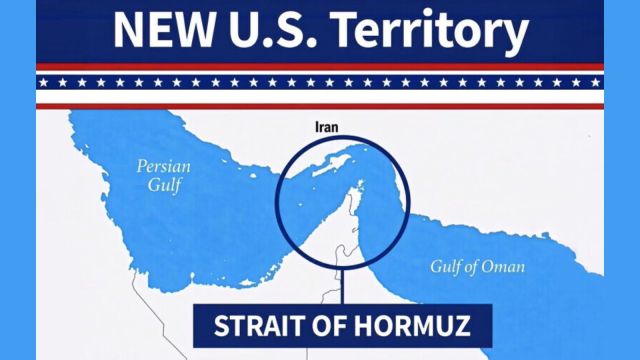
His remarks came after US President Donald Trump posted a map on his social media handle on Truth Social claiming authority over the Strait of Hormuz.
He shared an image depicting a map of the region, with the Strait of Hormuz circled, below a caption reading: “NEW U.S. Territory.”
This is the second time in a week that Trump has shared the image; however, this time he included no caption or commentary.
Elsewhere in Syria, an Israeli drone attack on a truck in the village of Beit Jinn in southwestern Syria has resulted in several civilians being injured, according to Syria’s Ministry of Foreign Affairs and Expatriates.
Israeli forces have continued air strikes and heavy artillery attacks across several areas of southern Lebanon, including firing phosphorus shells, Lebanese state media reported