


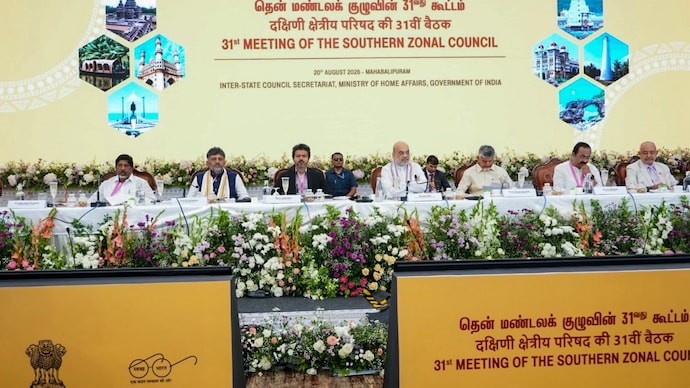
At the meeting with the CM, Chief Ministers of the Southern states, chaired by Union Home Minister Amit Shah in Tamil Nadu on Thursday, delimitation, protection of Southern states, political representation, NEET examination, Cauvery water sharing and greater fiscal autonomy emerged as key issues.
The Karnataka CM sought a formal resolution to protest the South’s parliamentary strength, while Tamil Nadu CM Joseph Vijay pressed for safeguards against any reduction in religion’s political voice following the proposed delimitation exercise. He further pushed for greater cooperation among southern states on river water management, Transport, logistics, coastal security, drug trafficking and disaster response.
In terms of education, Vijay sought exemption for Tamil Nadu from NEET and proposed that MBBS, BDS and Ayush admissions be conducted under the state quota based on Class 12 marks, arguing that the examination disadvantages rural and socially and economically weaker students. Emerging as the key discussion area Karnataka minister sought cooperation on the Megaduta project, while Andhra Pradesh Chief Minister N. Chandrababu Naidu proposed the diversion of more than 500 TMC of water through Godavari-Cauvery interlinking project.
Besides, Kerala also offered to ensure Tamil Nadu receives water from a proposed new Mullaperiyar Dam if Tamil Nadu agrees the project, while seeking greater regional cooperation on port, rail connectivity, coastal protection and interstate security.The Congress dominated state also sought regional cooperation to develop the state as a port hub under Mission Samudra and called for the withdrawal of the proposed amendment to binding law, arguing that mineral-bearing states must retain their fiscal rights.
Stressing on delimitation, Karnataka Chief Minister D.K. Shivakumar called for the South Zonal Council to adopt for a resolution seeking protection of the region’s parliamentary representation. He urged the Centre to continue using the 1971 census as the basis for delimitation, retain the Lok Sabha’s existing strength of 543 seats for the next 25 years and accommodate women’s reservations within the existing number of seats.