


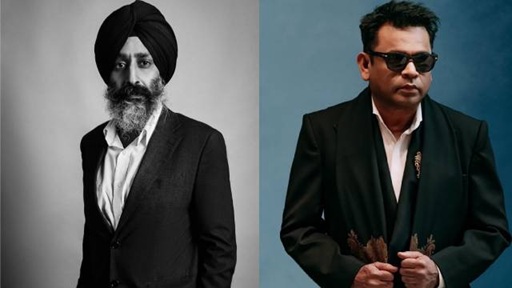
Singer-songwriter Rabbi Shergill on Thursday come out in support of music composer A.R. Rahman’s earlier remarks about an alleged communal angle affecting opportunities in the Hindi film industry, saying the veteran composer should be taken at his word. “If Rahman had raised concerns, “you have to take him at his word”, he said.
Speaking during an interview with The Life Savers Show, Shergill said he was not aware of the exact context in which Rahman made the statement but believed the concern could not simply be brushed aside. “I don’t know in what context he said it, but how can you deny that right now? How can you deny the communal angle?” Shergill said.
While clarifying that he could not comment specifically on whether such bias exists within the music industry because he does not live or work in Mumbai, Shergill said recent developments in the film industry reflected a broader political shift.
He referred to films such as The Kashmir Files and The Kerala Story, describing them as political films that, in his view, do not necessarily present an unbiased perspective. Shergill also linked the debate to wider political developments across the world, saying right-leaning ideologies have gained prominence in many countries.
According to him, politics has shifted significantly from the influence of left-leaning ideologies that were more visible globally during the 1960s. He further observed that neighbouring countries such as Pakistan, China and Sri Lanka have also witnessed major ideological changes over the years, suggesting that the trend extends beyond India.
Speaking about domestic politics, Shergill said political parties in India have increasingly become centred around a single dominant leader. He cited parties including the Congress, the BJP, the Trinamool Congress, the Samajwadi Party and the Aam Aadmi Party while arguing that internal dissent against central leadership has become increasingly difficult.
Rahman had earlier stated that work from the Hindi film industry had slowed for him over the past several years, attributing it to changing power dynamics and suggesting there “might have been a communal thing.”
In an interview with BBC Asian Network, the Oscar-winning composer said creative decisions were increasingly being influenced by people who were not themselves creative. He also claimed he had heard, through what he described as Chinese whispers, that projects initially intended for him were later handed to multiple other composers.
Following criticism over his remarks, Rahman issued a statement on Instagram saying he never intended to hurt anyone’s sentiments. He said music has always been his way of connecting people and emphasised that India remains his inspiration, teacher and home. Rahman added that his intention has always been to honour culture through music and that he hoped his sincerity would be understood.