


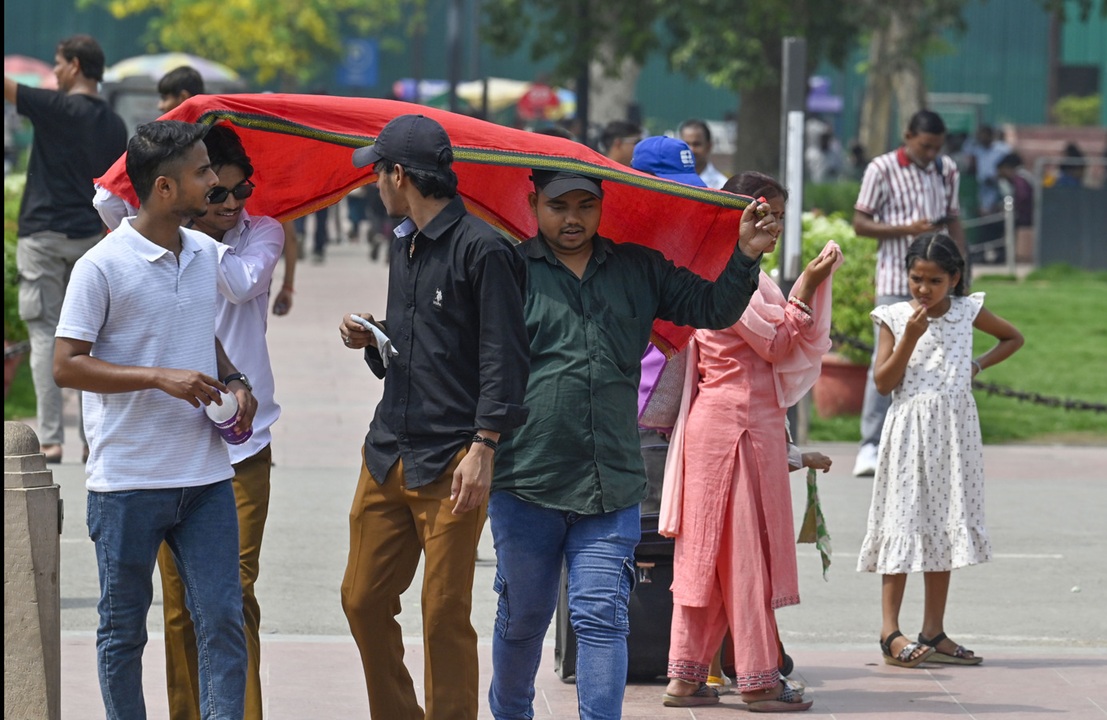
Delhi, the capital of India, has been experiencing an intense spell of heat, but the discomfort residents are experiencing goes beyond the city’s recorded temperature. While the India Meteorological Department (IMD) measured the maximum temperature at 41.3 degrees Celsius, the real feel or heat index touched 51.3 degrees Celsius due to high humidity levels. Delhi may not have crossed the 50-degree Celsius mark, but for residents, it certainly feels that way.
On Saturday, the India Meteorological Department (IMD) recorded the capital’s maximum temperature at 41.3°C, around 4.1°C above normal for this time of the year. Yet the city’s heat index, or “feels-like” temperature, surged to 51.3°C—the highest of the season. The sharp difference has raised a common question: if the air temperature is around 41°C, why does it feel almost 10 degrees hotter?
However, this is because of an unusual combination of high humidity, delayed monsoon conditions and moisture-bearing winds, all arriving at the same time to make the things more worsen.
Unlike the dry heat that typically defines Delhi’s summers, the capital is currently trapped under unusually humid conditions. According to the IMD, relative humidity fluctuated between 35% and 63%, while the wet-bulb temperature touched 29.77°C. Wet-bulb temperature measures how effectively the human body can cool itself through sweating. When humidity is high, sweat evaporates more slowly, making it much harder for the body to release heat. As a result, the weather feels significantly hotter than the actual air temperature.
Meteorologists generally consider wet-bulb temperatures above 32°C dangerous for prolonged outdoor activity because the body’s natural cooling mechanism becomes increasingly ineffective. Delhi has not reached that threshold, but 29.77°C is already high enough to create severe discomfort, especially when combined with temperatures above 40°C.
The biggest reason behind Delhi’s sticky weather is not local rainfall but winds travelling hundreds of kilometres. Weather experts say southwesterly winds from the Arabian Sea are transporting large amounts of moisture into northwestern India, including Delhi. Under normal circumstances, these moisture-laden winds are accompanied by the southwest monsoon, which brings widespread rainfall and helps lower daytime temperatures.
This year, however, the monsoon has slowed over north India, creating an unusual situation: moisture has arrived, but widespread rain has not. The result is a blanket of humid air that traps heat near the surface, making conditions feel far more oppressive.
The heat index is not the actual air temperature. Instead, it combines temperature and humidity to estimate how hot conditions feel to the human body.
On Saturday:
Maximum temperature: 41.3°C
Humidity: 35%–63%
Wet-bulb temperature: 29.77°C
Heat index (real feel): 51.3°C
This explains why outdoor conditions felt far harsher than what the thermometer indicated.
Delhi has not been cooling down after sunset either. The IMD recorded a minimum temperature of 30.8°C, nearly 2.9°C above normal, meaning buildings, roads and concrete structures continue to radiate stored heat through the night. Combined with high humidity, this limits overnight cooling and leaves residents facing persistently warm and uncomfortable conditions.
The weather department expects conditions to improve gradually as the southwest monsoon advances further into north India. The IMD has forecast light rain, thunderstorms and gusty winds beginning June 29, with maximum temperatures likely to decline from around 41°C to 33–35°C over the coming days. As rainfall becomes more widespread, humidity may initially remain high, but cloud cover and precipitation are expected to reduce daytime temperatures and bring much-needed relief to the capital.Delhi’s ‘real feel’ touches 51°C: Here’s why it feels much hotter than recorded