


Passport is not citizenship proof ? 5 key questions after MEA’s clarification on Indian passports

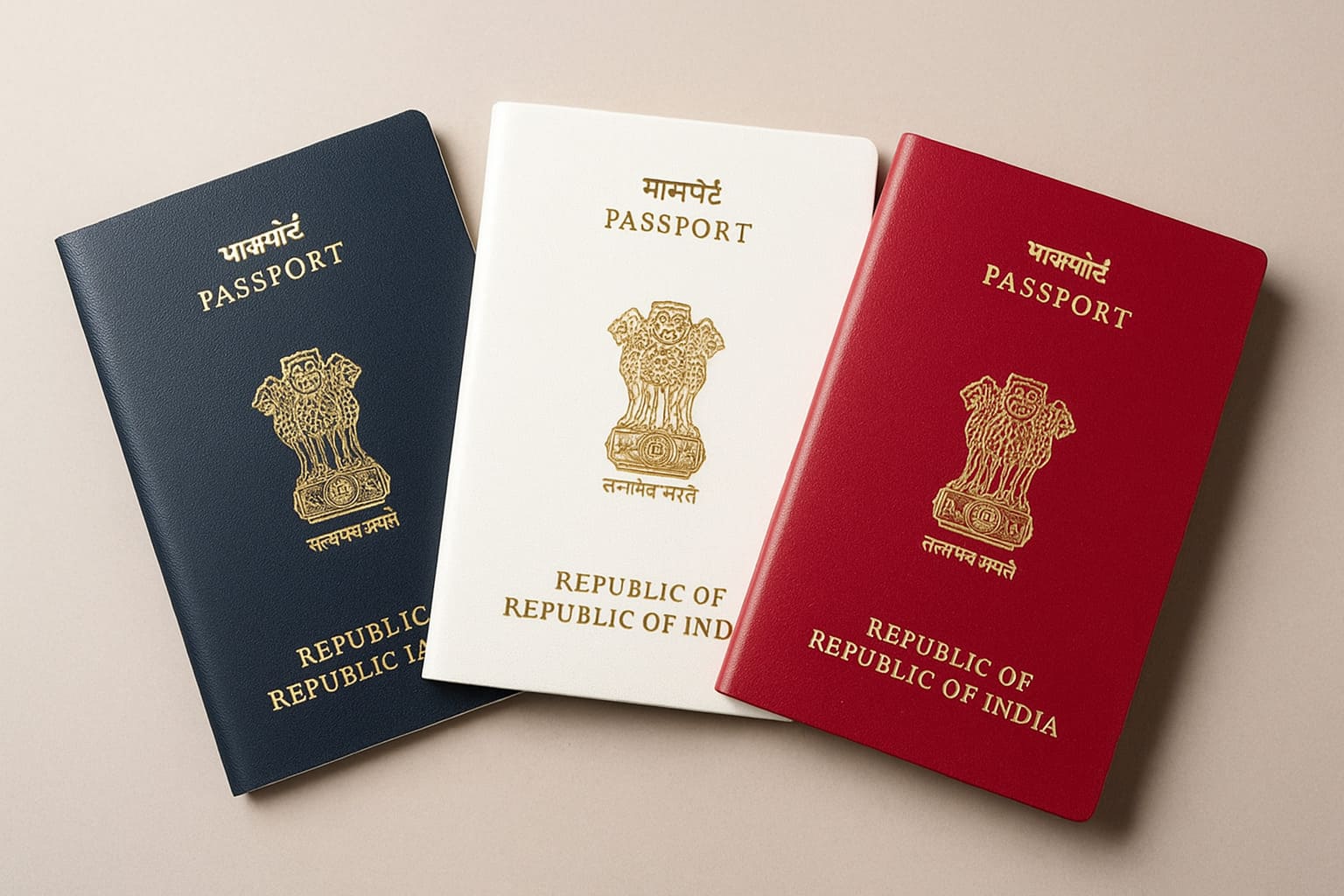
If an Indian passport is merely a travel document and not proof of citizenship, why does it require extensive police verification? Why must it be surrendered after acquiring foreign citizenship and why it has a provision to return it to avoid penalties? A recent clarification by the Ministry of External Affairs (MEA) has sparked discussion about the role of passports, police verification, surrender rules and the legal basis of citizenship in India. While a passport is widely accepted as evidence of nationality in everyday life, authorities maintain that citizenship is ultimately determined by the provisions of the Citizenship Act, 1955.
Why must Indians surrender their passport after acquiring foreign citizenship?
Indian law does not allow dual citizenship. Under the Citizenship Act, 1955, a person who voluntarily acquires the citizenship of another country automatically ceases to be an Indian citizen. As a result, retaining or using an Indian passport after obtaining foreign nationality is prohibited under the Passports Act, 1967. Former citizens are required to surrender their passports so authorities can cancel the document and update official records. This process also facilitates the issuance of a Surrender Certificate or Renunciation Certificate, which may be required while applying for an Overseas Citizenship of India (OCI) card or an Indian visa.
Why is police verification required for a passport?
Police verification is part of the due diligence process carried out before a passport is issued. It is intended to verify an applicant’s identity, address and background while helping authorities detect fraudulent applications or security concerns.
Depending on the applicant’s circumstances, passport applications may be processed under pre-police verification, post-police verification or no police verification categories. Although applicants have often complained about delays and procedural challenges, authorities consider the process necessary to maintain the integrity of the passport system.
Can non-citizens receive an Indian passport?
A lesser-known provision under Section 20 of the Passports Act allows the Central Government to issue a passport or travel document to a non-citizen in exceptional circumstances if it is deemed necessary in the public interest.
Such cases are rare and generally involve special situations. Importantly, receiving such a document does not grant Indian citizenship. The provision is often cited to explain why a passport by itself is not considered definitive proof of citizenship under Indian law.
Is an Indian passport government property?
Yes. Under Section 17 of the Passports Act, every Indian passport remains the property of the Central Government.
Authorities view the passport as a state-issued document that represents India’s authority internationally. Since it can be revoked, impounded or cancelled under specific circumstances, ownership remains with the government rather than the holder.
This legal position is also one of the reasons why surrendered passports must be returned to authorities after citizenship is renounced.
If a passport is not proof of citizenship, what is?
Citizenship in India is determined by the Citizenship Act, 1955, which lays down the legal framework for acquiring citizenship through birth, descent, registration, naturalisation or incorporation of territory.
In day-to-day situations, documents such as passports, Aadhaar cards, voter identity cards, PAN cards and ration cards are often accepted as evidence of nationality or identity.
However, legal experts note that no single document is considered conclusive proof of citizenship. In cases where citizenship status is disputed, the determination is made according to the provisions of the Citizenship Act and supporting evidence rather than relying solely on one document.
Meanwhile, the debate highlights an important distinction between citizenship and documentation. A passport is issued after verification and serves as one of the strongest indicators of nationality for travel and administrative purposes. However, citizenship itself remains a legal status governed by law, not by possession of any single document. The discussion has also renewed attention on why authorities conduct police verification, require passport surrender after foreign naturalisation and continue to treat passports as government property despite describing them primarily as travel documents.