


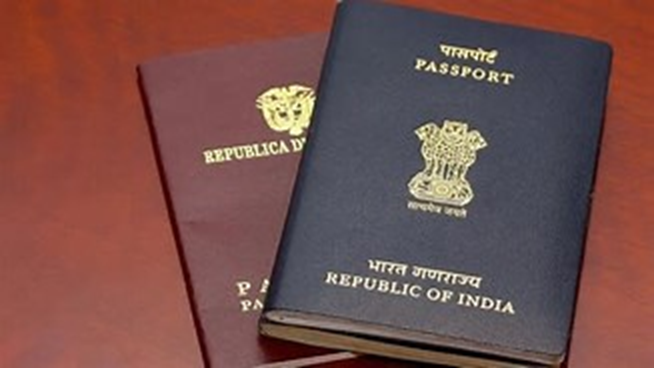
The Ministry of External Affairs has issued a clarification over the growing doubts about passport being a proof of citizenship and an eligibility criterion for government benefits. The MEA strictly clarified that the Indian passport was merely a travel document and should not be treated as a conclusive proof of citizenship.
The clarification came during on the occasion of the 14th Passport Seva Divas. The MEA hailed the efficient, transparent, and citizen-centric passport services, highlighting the reforms to make the passport more accessible, secure and globally accepted. Officials stressed that passport were merely a travel document that would enable one establish an identity on foreign lands.
“A passport is issued after a lot of due diligence, and it is based on documents from several government agencies,” an official was quoted as saying by multiple media.
In a message shared on X, Jaishankar noted that the event marks the anniversary of the Passports Act of 1967 and serves as a reflection on the modernisation of India’s passport infrastructure.
During the briefing the nationwide roll, out of chip enabled-e-passport was also highlighted. All newly issued passports since May last year have been embedded with secure electronic chips containing biometric information of the passport holder and security features compliant with International Civil Aviation Organization standards. The move aims to position the document internationally and reduce fraud.
The MEA further highlighted India’s progressing global mobility partnerships. Around 27 mobility agreements have been signed with 25 nations, including major destinations such as EU, UK, Australia and other gulf countries. These arrangements are expected to help students, apprentices, researchers and business travellers a smooth movement. Indian citizens can now travel visa free to 27 countries, 47 others offer visa on arrival while 66 nations extended e-visa facilities to Indian travellers.
He further affirmed that the MEA has achieved significant digital milestones, including the successful operationalisation of the upgraded Passport Seva Programme (PSP V2.0) domestically and the deployment of the Global Passport Seva Programme (GPSP V2.0) at diplomatic missions worldwide to better serve the Indian diaspora.
The officials asserted that the governments’ broader objective is to transform the Indian passport for just a travel document to privilege while ensuring that immigration remains safe, orderly and beneficial for both the workers and destination countries.
A wave of speculations has begun on what document would now identify an individual as an Indian. In the recent days Aadhar card that was initially introduced titled as the citizenship proof has also lost its positioning lately. Responding to PILs filed , the EC has said that Aadhaar is only being used as a proof of identity in terms of Section 23(4) of the Representation of the People Act, 1950. It asserted that it is not a proof of citizenship. It also referred to the Office Memorandum of August 22, 2023 of the UIDAI which has clarified that Aadhaar is not proof of citizenship, residence, or date of birth. It further referred to Section 9 of the Aadhaar Act 2016, which stated that Aadhaar n…