


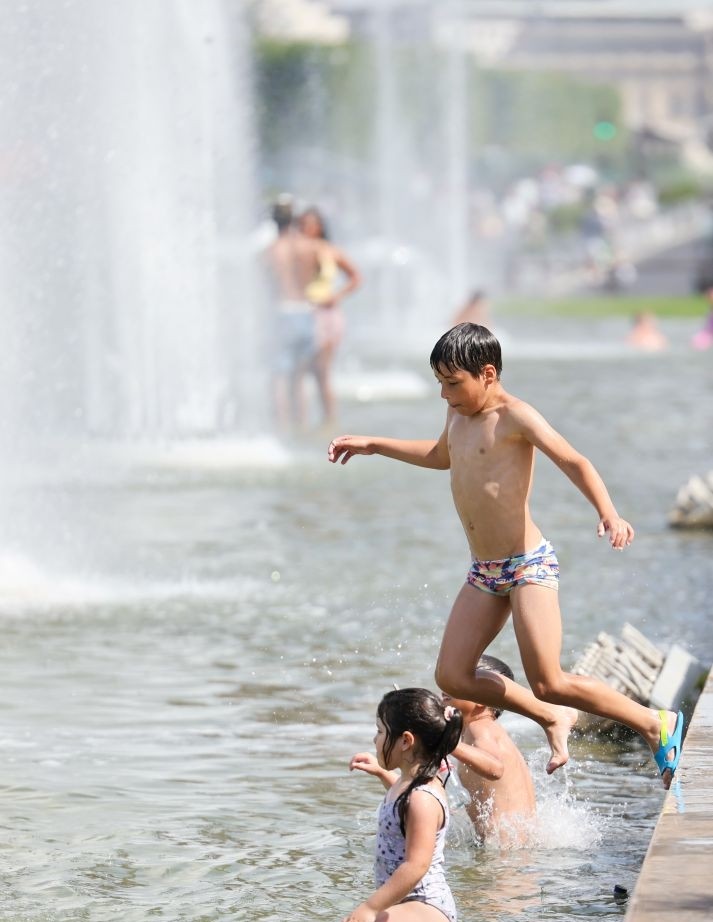
As many as 40 people drowned to death in France over the recent days as they sought to escape the heat, the PM said on Tuesday, as temperatures soar across much of Europe. The night from Monday to Tuesday was the hottest recorded in France since national meteorological records began in 1947, with the national nighttime heat indicator, calculated from data at 30 meteorological stations across the country, reaching 21.6 degrees Celsius, Meteo-France said on Tuesday.
According to the World Meteorological organization, Europe has been warming at more than twice the global average making prolonged heat episodes likely. With the temperatures peaking at 44.3 degrees celsius, “Thursday will once again be a sweltering day (in France), with temperatures remaining just as high. On Friday, a gradual drop is expected to begin from the Atlantic coast,” the weather forecaster said.
According to the meteorological institute, 54 departments in mainland France were placed under red heatwave alert, the highest alert level, on Tuesday, while 35 departments were placed under orange alert.
Witnessing an increasing rise in the number of people jumping into canals and rivers, the sport minister warned against swimming in unauthorized or dangerous areas. Speaking ahead of an emergency meeting on the heatwave, Prime Minister Sebastien Lecornu called the drownings “a sad scourge” and said there had been 40 deaths since June 18, most of them young people.
The heatwave is being driven by a weather pattern known as an Omega block, because it takes the shape of the Greek letter Ω, with a bulge of hot air trapped between cooler systems, allowing temperatures to build day after day. Heatwaves and storms are being intensified by climate change.
Remising 20023, Meteo France said current conditions were comparable to the August 2003 heatwave, which lasted 16 days and led to an estimated 80,000 excess deaths across Europe.
Britain, Italy, Switzerland and Spain were also sweltering in extreme heat, with record temperatures in some areas disrupting schools and transport networks and forcing tourist sites – including the Eiffel Tower – to shut.