


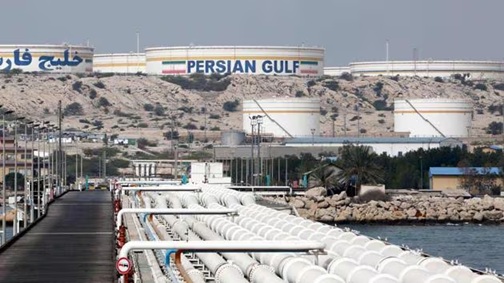
The United States has lifted temporary ban on Iran’s oil sector. The move has been seen as significant implications for global energy markets and potentially benefit India, one of the world’s largest crude oil importers. The United States has issued a 60-day waiver allowing transactions involving Iranian crude oil, petroleum products and petrochemicals until August 21. The decision comes amid ongoing diplomatic efforts with Tehran and is being viewed as a confidence-building measure linked to broader negotiations.
The US Treasury has granted a temporary general licence permitting activities related to the production, sale, delivery and import of Iranian crude oil and petroleum products. The waiver also covers associated services, including shipping, insurance and banking transactions connected to the oil trade.
The move follows Iran’s agreement to allow inspections by the International Atomic Energy Agency (IAEA) and participate in wider diplomatic discussions. While the waiver does not amount to a permanent removal of sanctions, it signals a potential opening for Iranian oil to re-enter international markets.
India imports nearly 85 per cent of its crude oil requirements, making the country highly vulnerable to fluctuations in global energy prices. Changes in crude oil prices directly influence India’s import bill, inflation levels, fiscal calculations and fuel costs for consumers.
Over the past few years, India’s oil sourcing strategy has shifted significantly, with Russia emerging as a major supplier following the Russia-Ukraine conflict. India also continues to depend heavily on Gulf producers such as Saudi Arabia, Iraq and the UAE. The return of Iranian crude to global markets could provide India with another potential source of supply and improve energy diversification.
Before US sanctions were reimposed in 2018, Iran was among India’s leading crude oil suppliers. Indian refiners valued Iranian crude for its competitive pricing, favourable payment terms and relatively lower transportation costs. However, sanctions forced Indian refiners to halt purchases, effectively ending a long-standing energy relationship.
Another key aspect of the US-Iran understanding relates to maritime security in the Strait of Hormuz, one of the world’s most important oil transit routes. A substantial portion of India’s oil imports passes through the narrow waterway connecting the Persian Gulf to international markets.
Any reduction in tensions around the Strait of Hormuz lowers the risk of supply disruptions and sharp increases in oil prices, offering an additional advantage for energy-dependent countries such as India.
India’s annual crude oil import bill exceeds $100 billion and remains highly sensitive to changes in global prices. Even a modest decline in benchmark crude prices can generate significant savings for the country and help contain inflationary pressures.