


On-off-on… The status of negotiations between the US and Iran in Switzerland to reach a conclusion remained uncertain as US President Donald Trump continued to issue Tehran threats and refuse to end attacks on Lebanon.
In a social media post, Trump said Iran must stop its highly paid proxies in Lebanon from causing trouble. He warned that if this does not happen, the US will hit Iran again, just as it did last week, but harder. The warning came while the negotiations were underway in Switzerland. According to Iranian media reports, the Iranian delegation walked out of the venue in protest and later refused to continue quadrilateral talks involving the US, Pakistan and Qatar. While no official sources confirmed the walk out, mediators from Pakistan and Qatar noted that the high stakes discussion would continue into early hours of Monday in Switzerland.
Here’s what happened in Burgenstock on Day 1
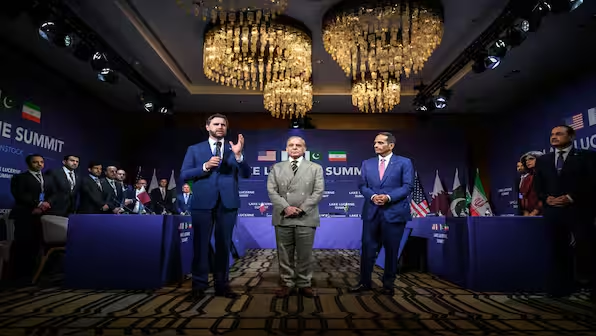
The U.S. team is led by Vice President J.D. Vance and includes Jared Kushner and Steve Witkoff. The Iranian negotiators are led by Parliament Speaker Mohammad Bagher Qalibaf and Foreign Minister Abbas Araghchi. Pakistani Prime Minister Shehbaz Sharif, Army chief Asim Munir and Qatar Prime Minister Sheikh Mohammed bin Abdulrahman Al Thani also took part as mediators.
The talks began Sunday based on the 14 point Memorandum of Understanding signed by both the nations which opened a 60day window of discussion and ceasefire to de-escalate the tensions in the Middle East.
According to reports, discussions were held in various format throughout the day. The main issues that discussed were – ‘deconfliction mechanisms’ and ‘enforcing the ceasefire’ in Southern Lebanon. Besides, discussions on the crucial Strait of Hormuz were also in place as reports made round that Iran threatened to close the waterways again. Other issues include unfreezing billions of dollars in Iranian assets and addressing the heart of tensions: Iran’s nuclear program.
In a joint statement issued by mediators Qatar and Pakistan, the talks were described as having taken place in a “positive and constructive atmosphere”, with the parties making “encouraging progress” towards addressing key issues between Washington and Tehran.
A direct communication channel between the two parties was created to avoid misunderstandings, reduce the risk of escalation and manage incidents during the 60 days of negotiations. A committee has also been formed by both the nations that will overlook mediation process and provide political insights. It will receive regular updates from the chief negotiators, who will lead separate working groups focused on nuclear-related issues, sanctions, monitoring mechanisms, dispute resolution arrangements and other matters linked to the implementation of the memorandum of understanding.
With the proposed framework in place, technical discussions are expected to continue through the week at the Burgenstock resort.