


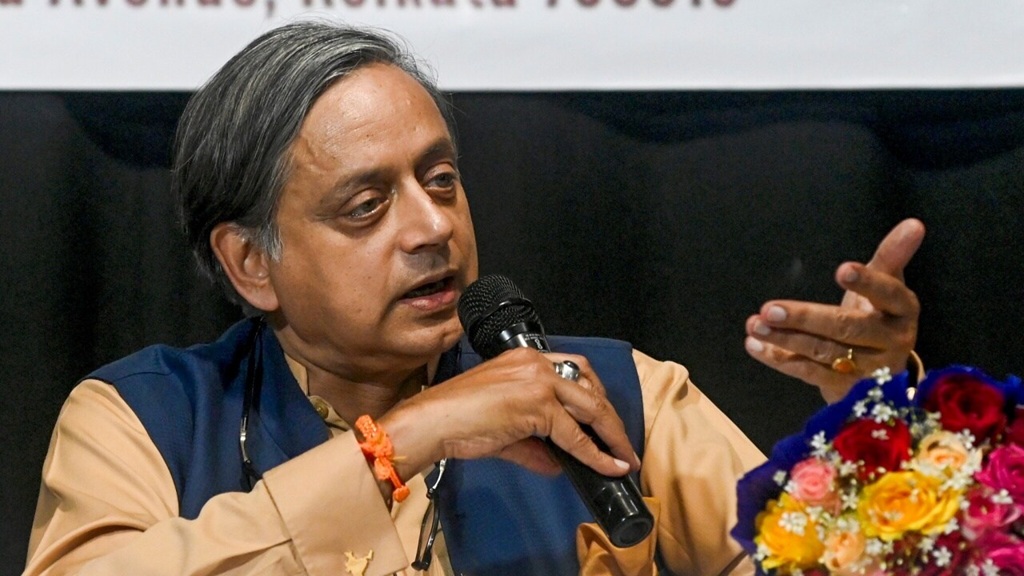
Congress MP Shashi Tharoor has questioned the United States’ decision to revert its Indo-Pacific Command back to its earlier designation, the US Pacific Command, suggesting that the move could have implications for the Quad grouping and Washington’s regional strategy.
Reacting to the development on social media platform X, Tharoor wrote: “One more nail in the coffin of the Quad?” His remark followed the US announcement that the US Indo-Pacific Command (USINDOPACOM) would once again be known as the US Pacific Command (USPACOM), rolling back the 2018 decision that introduced the Indo-Pacific nomenclature to reflect a wider strategic theatre connecting the Indian and Pacific Oceans.
The United States has clarified that the decision is limited to nomenclature and does not alter the command’s operational role or strategic responsibilities.
According to the US Department of Defence, the restoration of the earlier name is meant to reflect the historical legacy of the command, which was first established in 1947. Officials have stated that the command’s mission, partnerships, and regional commitments remain unchanged despite the renaming.
The term “Indo-Pacific” was formally adopted in 2018 as part of a broader strategic shift that highlighted the growing importance of the Indian Ocean region alongside the Pacific theatre. At the time, then US Defence Secretary James Mattis described the Indo-Pacific as a unified strategic space stretching “from Bollywood to Hollywood”, underlining its expansive geopolitical scope.
The latest decision to drop the “Indo-Pacific” label has triggered renewed discussion among observers about whether it signals any shift in strategic emphasis or is merely a return to historical terminology.
The US Indo-Pacific Command, headquartered in Hawaii, oversees a vast operational area stretching from the US West Coast to India’s western maritime boundaries and has played a key role in defence cooperation between India and the United States, including joint military exercises and maritime coordination.
While US officials insist the change is symbolic, Tharoor’s comments have added a political dimension to the development, raising questions in India about the future positioning of the Quad framework involving India, the United States, Japan, and Australia.
Analysts continue to debate whether the move reflects a substantive policy shift or is limited to nomenclature, as Washington maintains that its strategic commitments in the region remain unchanged.