


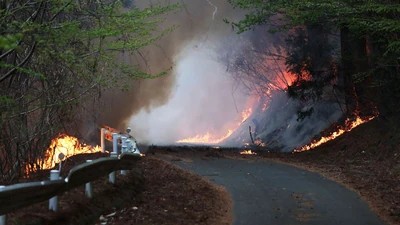
After a grueling 11-day firefighting, officials confirmed that wildfires that devastated huge forested areas in northern Japan were finally kept under control. The fire which has swept the mountainous Iwate area, is being touted as one of the largest wildfires in the country in over 30 years.
The fire that erupted in late April burnt almost 1,600 hectares (approximately 4,000 acres) of the land, which is about five times the size of the Central Park area of the city of New York. More than 1,000 armed forces were used to support hundreds of firefighters in battling the flames both aerial and on the ground.
The government said that no fewer than eight buildings were destroyed, and two people were slightly injured. The fire escalated and as a precaution measure, thousands of residents were evacuated in affected areas.
The mayor of Otsuchi town, Kozo Hirano, verified that the fire was contained after conducting an inspection of the area, together with the fire officials. He accredited the coordinated firefighting, and timely rainfall to have been instrumental in bringing the situation under control.
The accident has again put into focus the increasing susceptibility of Japan to wildfires. Experts have sounded warnings that there is an increasing threat of such disasters due to increasing dry-winters and altering climatic patterns. Actually, another big wildfire was witnessed in Iwate last year, with the biggest recorded wildfire in Japan happening in Hokkaido in 1975.
Scientists are still warning that climate change, which is the result of fossil fuel emissions, is exacerbating droughts in most parts of the world, which creates an environment that is more susceptible to the effects of large-scale wildfires.