


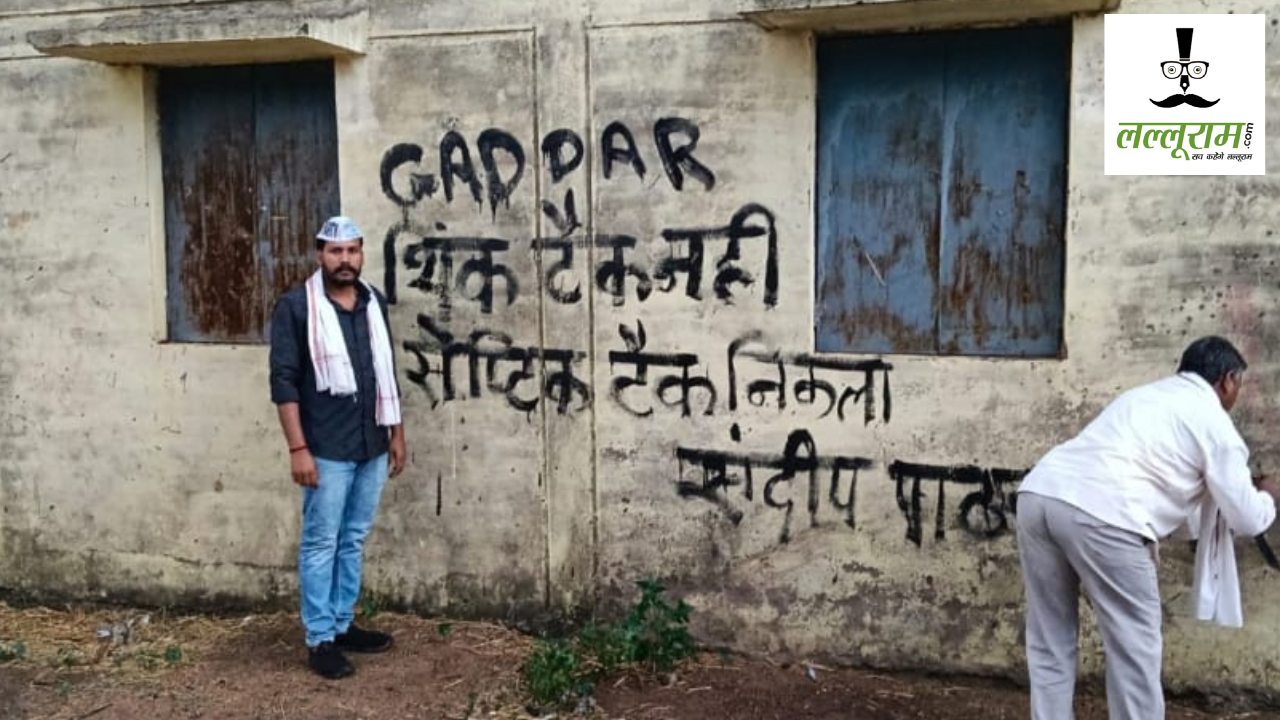
In Chhattisgarh, political tensions began when Rajya Sabha MP Sandeep Pathak crossed over to the Bharatiya Janata Party (BJP) and resigned from the Aam Aadmi Party (AAP). A furious protest by the workers of the AAP outside his home in his native village, Battha, in Mungeli district, followed his action.
Many party workers flocked outside his house, where they started slogans accusing him of being a traitor, an opportunist. As a means of protest, demonstrators left a mark of dissent by writing ‘traitor’ on the walls of the house during the protest. Other activists also resorted to scathing commentary, calling Pathak a septic tank rather than a think tank, and expressing their disappointment at his abrupt political turnaround.
Protesters claimed that Pathak betrayed the trust of party workers and followers by abandoning the party that had accorded him fame and prominence. Pathak is considered a key strategist in AAP and played an important role in the party’s electoral success, especially in the formation of the government in Punjab.
The scandal follows a significant political event on April 24, 2026, when several top party leaders, including Raghav Chadha, Sandeep Pathak, and Ashok Mittal, withdrew from the AAP at a press conference. Chadha affirmed that they wanted to join the BJP and alleged that several other MPs were on board.
Some of the people rumored to support the change include Harbhajan Singh, Swati Maliwal, Vikram Sahni, and Rajinder Gupta. Among the seven MPs who deserted AAP, there are six from Punjab and one from Delhi.
The merger of these seven dissenting MPs into the BJP, as proposed by the Rajya Sabha Secretariat, has significantly changed the balance of power in parliament, boosting the party’s numbers to 113 members in the Upper House.