


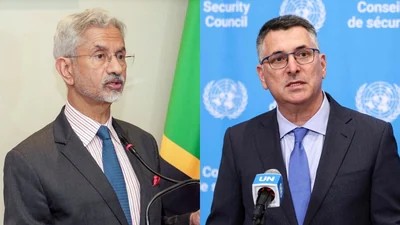
On Tuesday, S Jaishankar and Gideon Sa’ar both discussed the growing crisis in West Asia over a telephonic conversation, after the recent negotiations between the United States and Iran had failed to work out a peace agreement.
The talks were centered around major geopolitical issues, such as Iranian nuclear programme, security of the Strait of Hormuz sea routes and the overall situation in the area, such as in Lebanon. Both leaders recognized the tension that was on the rise and how it may affect the stability and economic safety in the world.
Jaishankar affirmed the dialogue in a short post saying that various facets of the West Asia situation were discussed. In the meantime, Sa’ar expounded that he had made it clear to the US that they needed to take the US stand in the negotiations especially demands meant to ensure that Iran did not get nuclear weapons. These comprise limitations of uranium enrichment in Iran and elimination of enriched nuclear material in the country.
Israeli foreign minister also expressed apprehensions over what he termed as the activities of Iran in the Strait of Hormuz, saying that they are a threat to the freedom of navigation, and may interfere with international trade. He emphasized that this kind of development would have far reaching effects on the world economy, particularly to the energy-reliant countries.
Sa’ar also requested the UN to organize collective action, calling on allied countries such as India and Gulf states to actively participate in solving the crisis. The discussion outlines an increasing diplomatic activity in the face of increasing geopolitical uncertainty in the area.