


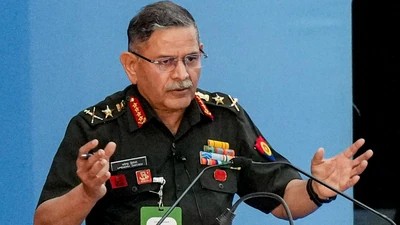
Upendra Dwivedi, Army Chief, added that the Operation Sindoor of India was not only carried out with accuracy but with a well-calculated time, as there was a strategic and humanitarian thought process in the attacks on terror infrastructure.
In describing the planning process, the Army Chief asserted that the armed forces were fully operational at will and could have made strikes at any time of the day or night. By the time we were about to attack these targets, it might have been 2 o’clock, it might have been 4 o’clock, it might have been any hour, and emphasized the preparation of the military.
But he pointed out that it was a conscious decision that the strikes would not be conducted during prayer hours in suspected terror camps. We made sure that we would not do the operation at a time when the other side had a chance to offer Namaz, he said, emphasizing that the operation was created so that it would not harm those who were not directly involved in terrorism.
Dwivedi concluded the strategy by the words: sabka malik ek hai, or one God to all, and indicated that the strikes were to take place in a period when no such prayers were in progress.
The launch of operation Sindoor came in reaction to the April 22 terror attack that happened in the Pahalgam area of Jammu and Kashmir that claimed 26 lives (mostly tourists). Subsequently, Indian forces attacked terror launch pads along the border and in Pakistan occupied Kashmir (PoK) after the attack.
On the post attack, Pakistan tightened the tension by flying drones and firing shells across the border. The Indian air defence systems intercepted several drone incursions over the course of a week, but some led to damages in border regions.